Ultra-Processed Foods and Weight: A Closer Look at the Two Strongest Trials
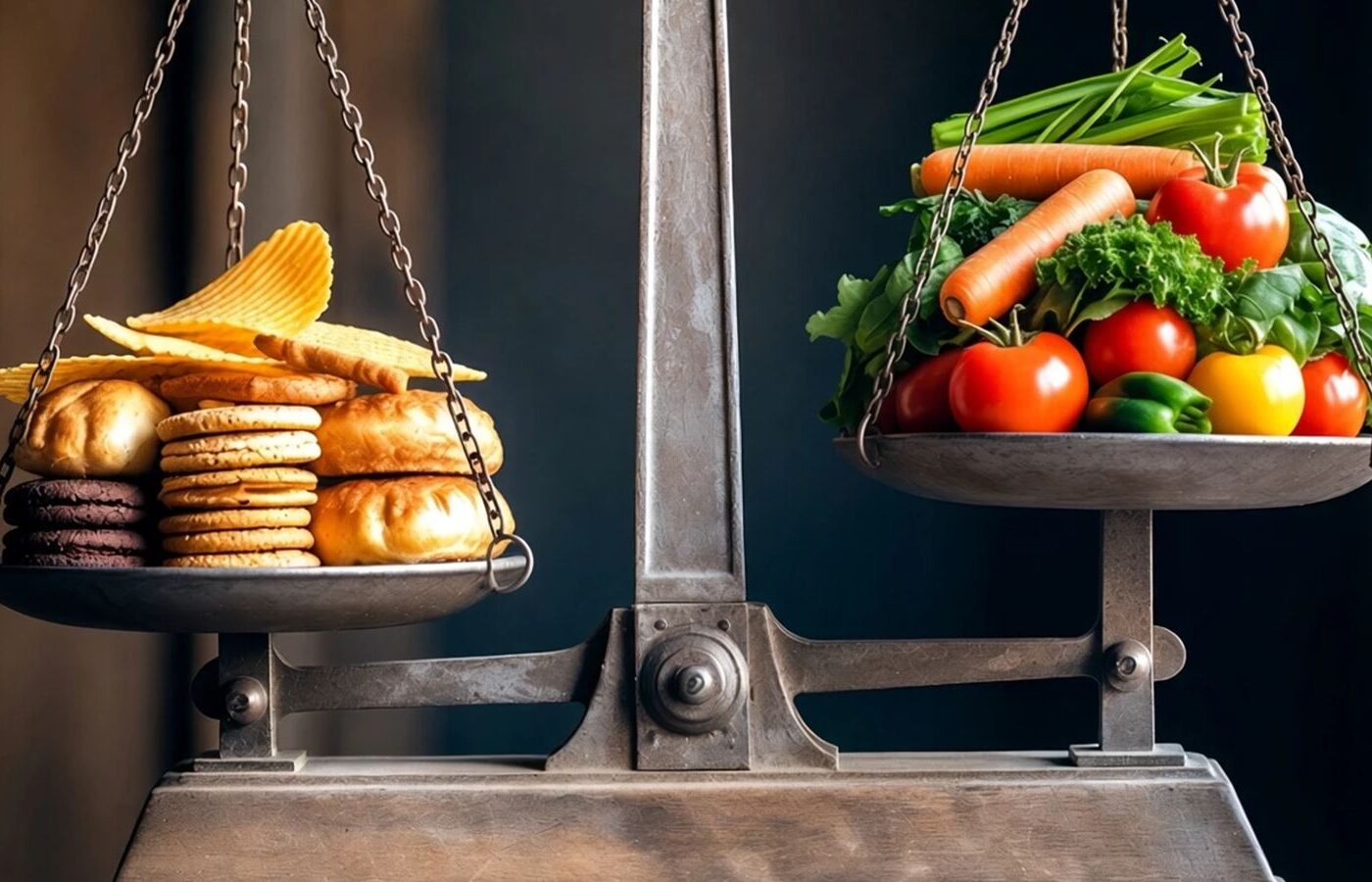
“Ultra-processed” has become one of the most argued-about words in food. Are these foods really driving weight gain, or is that too simple? Two carefully run trials, one from 2019 and one from 2025, give the best answers so far, and they point to some easy, friendly shifts you can try.
What counts as ultra-processed
The term comes from a food classification system called NOVA. Roughly, it separates whole or minimally processed foods, such as vegetables, eggs, plain yogurt and dried beans, from industrial products made largely from extracted ingredients and additives, such as many packaged snacks, sweetened drinks, instant noodles and ready meals. The line is not always clear, and researchers argue about where some foods belong. That is worth keeping in mind as you read the results.
Trial one: 20 adults living at the NIH
In 2019, researchers at the National Institutes of Health invited 20 healthy adults to live at the NIH Clinical Center for four weeks. For two weeks they ate mostly ultra-processed meals, and for two weeks they ate mostly minimally processed ones, in random order. The meals were matched for the calories, sugar, fiber, fat and carbohydrate they offered, and people could eat as much or as little as they liked.
- On the ultra-processed diet, people ate about 508 more calories a day.
- They gained about 0.9 kg (roughly 2 pounds) on the ultra-processed diet and lost about the same on the minimally processed one.
Because the setting was so controlled, this trial is often cited as evidence that the foods themselves, not just the people choosing them, can change how much we eat. That is a kind message: it is not all about willpower.
Trial two: 55 adults at home for 16 weeks
The UPDATE trial, published in Nature Medicine in 2025 by a UK team, tried to test this in everyday life. It enrolled 55 adults in England who were above a healthy weight and already ate a lot of ultra-processed food. For eight weeks they followed a minimally processed plan, and for eight weeks an ultra-processed plan, in random order. Both plans followed the UK’s national healthy-eating guidance, and food was provided to them.
- On the minimally processed plan, average weight change was about 2.06%, compared with about 1.05% on the ultra-processed plan.
- Reports on the study say the difference came from fat and body water, with no change in muscle or fat-free mass.
These figures are as reported in coverage of the study; we were not able to open the full paper, so please check the original if you plan to quote them.
Where the trials fall short
- They are small and short. Twenty people for two weeks, and 55 people for eight weeks, cannot tell us what happens over years.
- Not every processed food is equal. Whole-grain bread, canned beans, frozen vegetables and plain yogurt are processed, and the trials were not about those.
- Food was provided. In real life, time, money and access matter enormously. The NIH team noted that preparing minimally processed meals takes more of both.
- Weight is not the whole story. These trials measured eating and weight, not long-term health outcomes.
Small shifts that fit the evidence
You do not need to treat any food as forbidden. If you would like to nudge things in the direction the trials suggest, here are a few ideas to play with:
- Start with one meal. Breakfast is a common place to swap a packaged item for something like eggs, oats, fruit or plain yogurt.
- Read the ingredient list, not just the calories. A long list of unfamiliar additives is a clue that a product is heavily processed.
- Keep convenience that is still simple. Frozen vegetables, tinned fish and canned beans save time without much processing.
- Notice how fast you eat and how full you feel. Both trials hint that how foods are built may affect appetite. Our guide to building a balanced plate when your appetite is small covers eating well on smaller portions.
Protein is a good example of the label-reading challenge. Our guide to how much protein you actually need looks at the products that carry big protein claims, and our look at sleep and weight is a reminder that eating is shaped by more than what is on the plate.
Making it realistic
Two well-run trials found that people ate more and gained weight, or lost less, on ultra-processed diets. They do not prove that every ultra-processed food is harmful or that avoiding them is easy. A realistic goal is to move your everyday eating toward foods with shorter ingredient lists, one meal at a time, and to speak with a doctor or registered dietitian if you have a health condition that shapes what you can eat. Small steps count, and you can start with just one.
Sources
- Hall KD, et al. Ultra-processed diets cause excess calorie intake and weight gain: an inpatient randomized controlled trial of ad libitum food intake. Cell Metabolism, 2019. Full text (copy)
- National Institute of Diabetes and Digestive and Kidney Diseases. Study finds that ultra-processed foods cause overeating and weight gain. NIDDK
- Dicken SJ, et al. Ultraprocessed or minimally processed diets following healthy dietary guidelines on weight and cardiometabolic health: a randomized, crossover trial. Nature Medicine, 2025. DOI 10.1038/s41591-025-03842-0. UCL repository copy. Weight-change figures as reported by News-Medical.
Weight Wire is free to read. A free account lets you save articles and use the private journal and food lookup, which are free to use too. Create my free account

Weight Wire Editorial Team
Writer at Weight Wire.