Protein Is on Every Label Right Now. Do You Actually Need More?
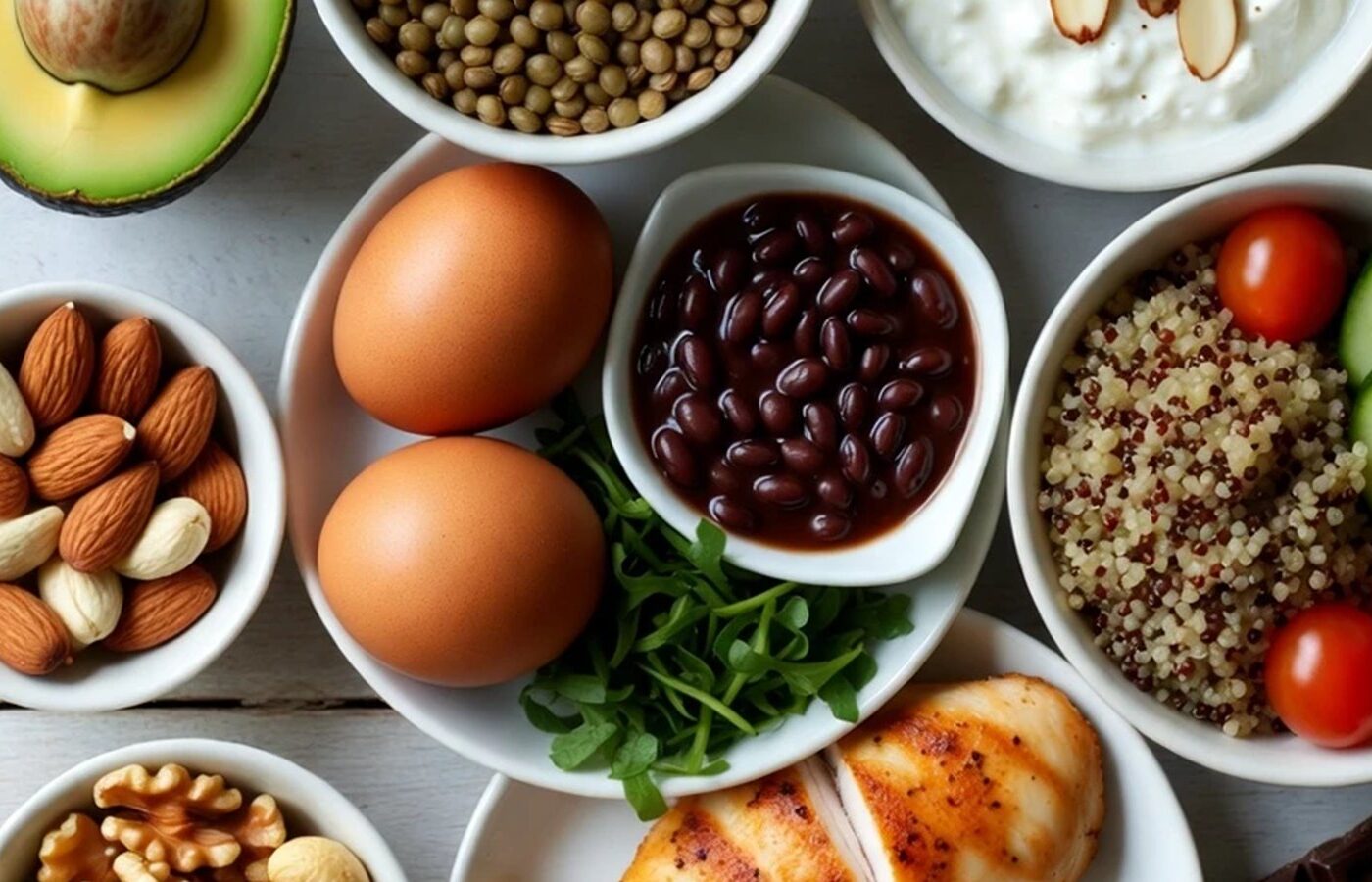
Pick up almost any box in the middle of the supermarket and look at the front. Cereal, crackers, granola, chips, even iced coffee: somewhere on the package, in a bold badge, is a number of grams of protein. A few years ago that was a sports-nutrition thing. Now it is simply how food gets sold.
At the same moment, the federal government has moved the goalposts. The 2025 to 2030 Dietary Guidelines for Americans recommend 1.2 to 1.6 grams of protein per kilogram of body weight per day, a clear step up from the long-standing minimum of 0.8. So the label hype and the official advice are pointing the same direction, and the good news is that you can get there with delicious, everyday food. The question worth asking is whether the packaging is actually the way to do it.
First, what changed
The 0.8 g/kg figure most of us grew up with is the Recommended Dietary Allowance, which was designed as the amount that prevents deficiency in healthy adults. It was never meant as a goal for thriving. The new guidelines recommend roughly 50% to 100% more than that, and they pair the number with a message about food: eat a variety of protein from animal sources such as eggs, poultry, seafood and red meat, and from plants such as beans, peas, lentils, nuts, seeds and soy.
Because protein is recommended by body weight rather than as a flat serving, your number depends on your size. Here is what the range means for a few body weights.
| Body weight | Old minimum (0.8 g/kg) | New range (1.2 to 1.6 g/kg) |
|---|---|---|
| 60 kg (132 lb) | 48 g | 72 to 96 g |
| 70 kg (154 lb) | 56 g | 84 to 112 g |
| 80 kg (176 lb) | 64 g | 96 to 128 g |
| 90 kg (198 lb) | 72 g | 108 to 144 g |
Our protein calculator now does this math for you.
What 100 grams of protein actually looks like
For most people, the surprise is how much food it takes. Using typical USDA FoodData Central values, here are some everyday amounts (approximate, and they vary by brand and preparation):
- One large egg: about 6 g
- A serving of plain nonfat Greek yogurt (about 170 g): roughly 17 to 18 g
- One cup of cooked lentils: about 18 g
- 100 g (about 3.5 oz) of cooked skinless chicken breast: about 30 g
- 150 g of firm, calcium-set tofu: about 26 g
Add two eggs and Greek yogurt at breakfast, lentil soup at lunch and a palm-sized piece of chicken or tofu at dinner, and you are around 100 grams without a single bar or shake. It is doable with ordinary food, and it just takes a little planning.
When you eat it matters, a little
Many of us eat a light breakfast, a modest lunch and a very large protein-heavy dinner. Research on muscle suggests that is not the most efficient pattern. Studies point to roughly 25 to 30 grams of protein per meal as the amount that most strongly stimulates muscle protein synthesis, and to evenly spread intake working better than loading it all into one meal. A 24-week trial reported by the Tufts nutrition newsletter found that adding protein at breakfast and lunch improved lean mass in healthy older adults. This is an area of active research, and it is not a rule, but moving a little protein earlier in the day is an easy and tasty experiment.
Reading the badge on the box
This is where we would take a breath and slow down. A protein claim on the front tells you one number. It does not tell you the rest:
- Check the sugar and sodium. A “high-protein” snack can still be a candy bar in a gym outfit.
- Check the serving size. The protein number can describe a small serving you might eat three of.
- Compare against real food. Eggs, yogurt, beans and fish deliver protein plus fiber, vitamins and minerals, often for less money per gram.
Packaged products can absolutely be convenient, especially when life is busy. They are just not magic, and they are not required.
Who should be more careful
The guidelines are for the general population, and everyone is not the same. People with kidney disease, and some others with specific conditions, are often advised to limit protein. Anyone taking a prescription medication, or recovering from illness, should check with a doctor or registered dietitian before making a big change. Higher protein is also not a substitute for movement: strength training is what tells the body to use protein to build and keep muscle, and it is a perennial favorite on the American College of Sports Medicine’s list, which we cover in the top fitness trends of 2026. If your appetite is small, whether from a medication or just a busy season, our guide to building a balanced plate shows how to fit protein into smaller meals, and our explainer on GLP-1 research covers why that has become a common question.
In short
The science and the marketing agree on one thing: most of us can probably stand to eat more protein. The official range is 1.2 to 1.6 grams per kilogram, which works out to a lot more than the old minimum. You can get there with an egg, a yogurt, a bowl of lentils and a piece of fish or tofu, and you do not need the badge on the box to do it. Happy eating!
Sources
- American Academy of Family Physicians. Dietary Guidelines for 2025-2030: Recommendations From the USDA and HHS. Am Fam Physician, 2026. aafp.org
- Morrison & Foerster LLP. New U.S. Dietary Guidelines Released: What You Need to Know (January 2026): mofo.com
- U.S. Department of Agriculture. FoodData Central (typical protein values for eggs, Greek yogurt, lentils, chicken breast and tofu): fdc.nal.usda.gov. Values are approximate and vary by product.
- Paddon-Jones D, Rasmussen BB. Dietary protein recommendations and the prevention of sarcopenia. Curr Opin Clin Nutr Metab Care. 2009. PubMed 19057193
- Tufts Health & Nutrition Letter. Protein at breakfast and lunch boosts muscle mass: nutritionletter.tufts.edu
- The 0.8 g/kg Recommended Dietary Allowance comes from the Dietary Reference Intakes set by the U.S. National Academies of Sciences, Engineering, and Medicine.
Not medical advice; see our Medical Disclaimer.
Published October 2, 2026. We update articles when new evidence or official guidance changes. If you spot an error, tell us.
Weight Wire is free to read. A free account lets you save articles and use the private journal and food lookup, which are free to use too. Create my free account

Weight Wire Editorial Team
Writer at Weight Wire.