Building a Balanced Plate When Your Appetite Is Small
When you are not very hungry, a full plate can feel like a chore. Appetite can shrink for plenty of reasons: certain medications, a stressful stretch, an illness, getting older, or just a change in routine. In those seasons the goal is not to eat more. It is to make the smaller amount you do eat work happily for you.
Why a small appetite needs a plan
Dietitians who work with people on appetite-reducing medications say the same thing again and again: it is easy to under-eat, and under-eating can leave gaps in protein, fiber and other nutrients. One registered dietitian at UCLA Health, quoted in a 2024 article, framed the answer simply. The goal is not “not eating.” It is still eating, with nutritious choices. Because every bite matters more when you eat less, the quality of each one matters more too, and that is a very doable thing. We see the same shift in shopping data, covered in how GLP-1 medications are changing the way people shop for food.
Build the plate in five steps
These ideas draw on common dietitian guidance and the U.S. Department of Agriculture’s MyPlate approach. They are general education, not a personal prescription.
- Start with protein. Dietitians often suggest eating the protein on your plate first, since protein supports fullness and helps preserve muscle. Eggs, fish, poultry, Greek yogurt, tofu, beans and lentils all count. The 2025 to 2030 Dietary Guidelines recommend 1.2 to 1.6 grams per kilogram of body weight per day for adults, and our protein explainer shows what that looks like in real food.
- Add color. MyPlate’s guidance is to make about half your plate fruits and vegetables. With a small appetite, even a few bites of cooked vegetables or a small piece of fruit brings fiber, vitamins and minerals.
- Include a whole grain or starchy food. Quinoa, barley, brown rice, oats or potatoes add energy and fiber. UCLA’s dietitian specifically points to fiber, which can also help with constipation, a common complaint when you are eating less.
- Keep portions small and eat more often. A small plate and a planned snack may feel easier than three big meals. A few nuts, some yogurt or a boiled egg make a nutrient-dense snack.
- Sip water through the day. The UCLA dietitian recommends at least eight cups a day. Large drinks with a meal can fill you up before you have eaten, so many people sip between meals instead.
What a small, balanced plate looks like
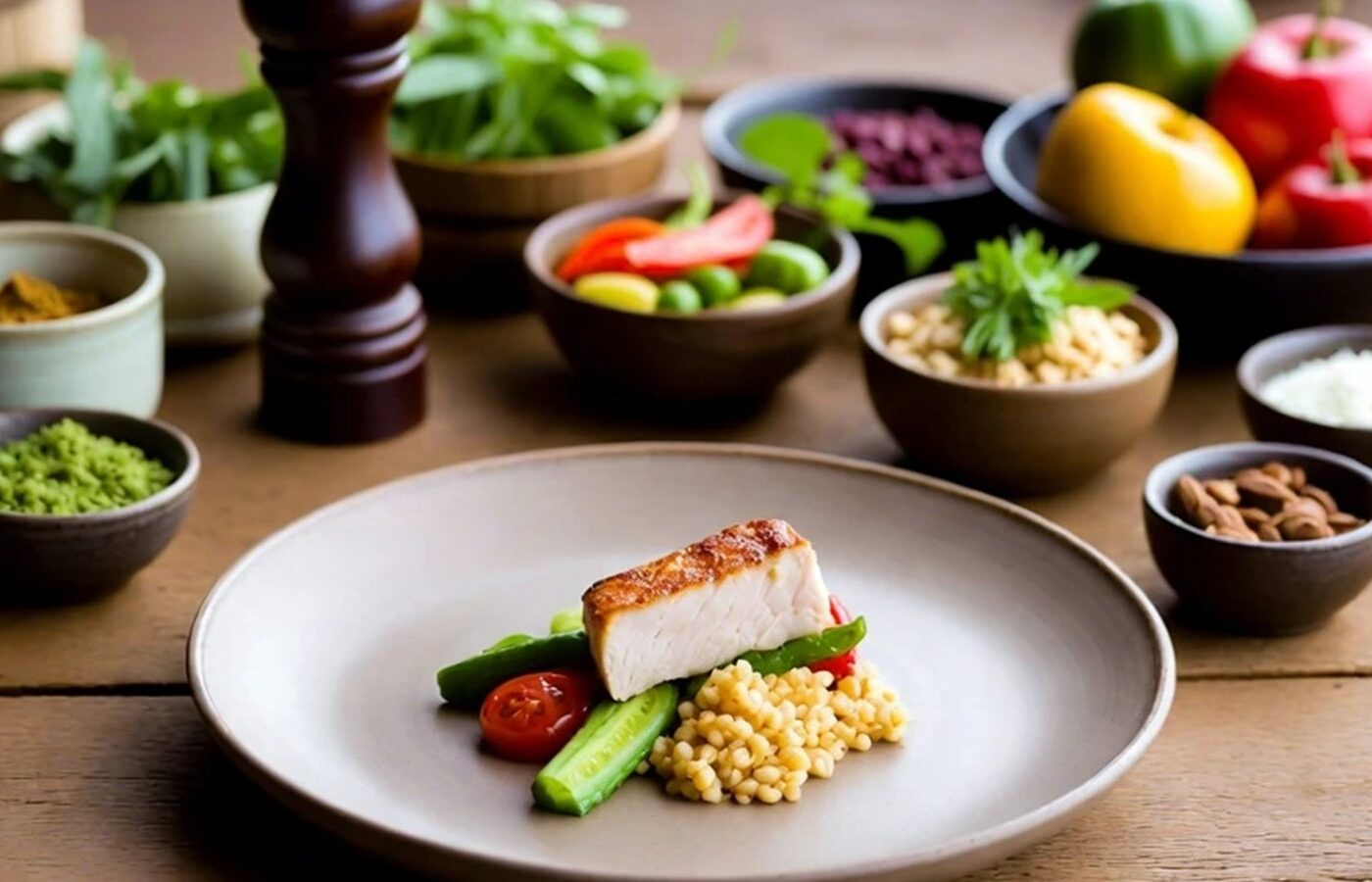
Picture a palm-sized piece of grilled fish, a few spoonfuls of a whole grain such as barley, and a handful of sliced tomato and cucumber, drizzled with a little olive oil. It is a small plate, but it covers protein, fiber and vegetables in a handful of delicious bites. That is the idea behind the photo at the top of this article.
A sample day when you are not very hungry
- Breakfast: Greek yogurt with berries and a few chopped nuts
- Mid-morning: a boiled egg and a piece of fruit
- Lunch: a small bowl of lentil soup with a slice of whole-grain toast
- Afternoon: a handful of almonds or hummus with vegetables
- Dinner: a small portion of fish or tofu with vegetables and a spoonful of quinoa
This is an illustration, not a prescription. Your needs depend on your age, size, health and medications.
Don’t forget movement
Strength training, paired with enough protein, helps protect muscle, and even two short sessions a week can make a difference according to the dietitian guidance we reviewed. It is also a perennial favorite among fitness professionals, as our roundup of the top fitness trends of 2026 shows. Ask your doctor what is right for you.
When to get help
If you are losing weight without trying, are unusually tired, or simply cannot manage to eat enough, talk to your doctor. If you take a prescription medication, ask your prescriber or a registered dietitian to tailor advice to your situation, and never change how you take a medication without their guidance. If you want to understand how these medications work, our explainer on why researchers are so interested in GLP-1 medications goes through the evidence.
Sources
- UCLA Health. Patients taking weight loss medications require proper nutrition (July 23, 2024; Christine Goukasian, MS, RDN): uclahealth.org
- U.S. Department of Agriculture. MyPlate: fna.usda.gov/tn/myplate
- American Academy of Family Physicians. Dietary Guidelines for 2025-2030: Recommendations From the USDA and HHS. aafp.org
This article is general education, not medical or dietary advice. See our Medical Disclaimer.
Published October 2, 2026. We update articles when new evidence or official guidance changes. If you spot an error, tell us.
Weight Wire is free to read. A free account lets you save articles and use the private journal and food lookup, which are free to use too. Create my free account

Weight Wire Editorial Team
Writer at Weight Wire.