Beans, Lentils and Chickpeas: Do They Help You Feel Full?
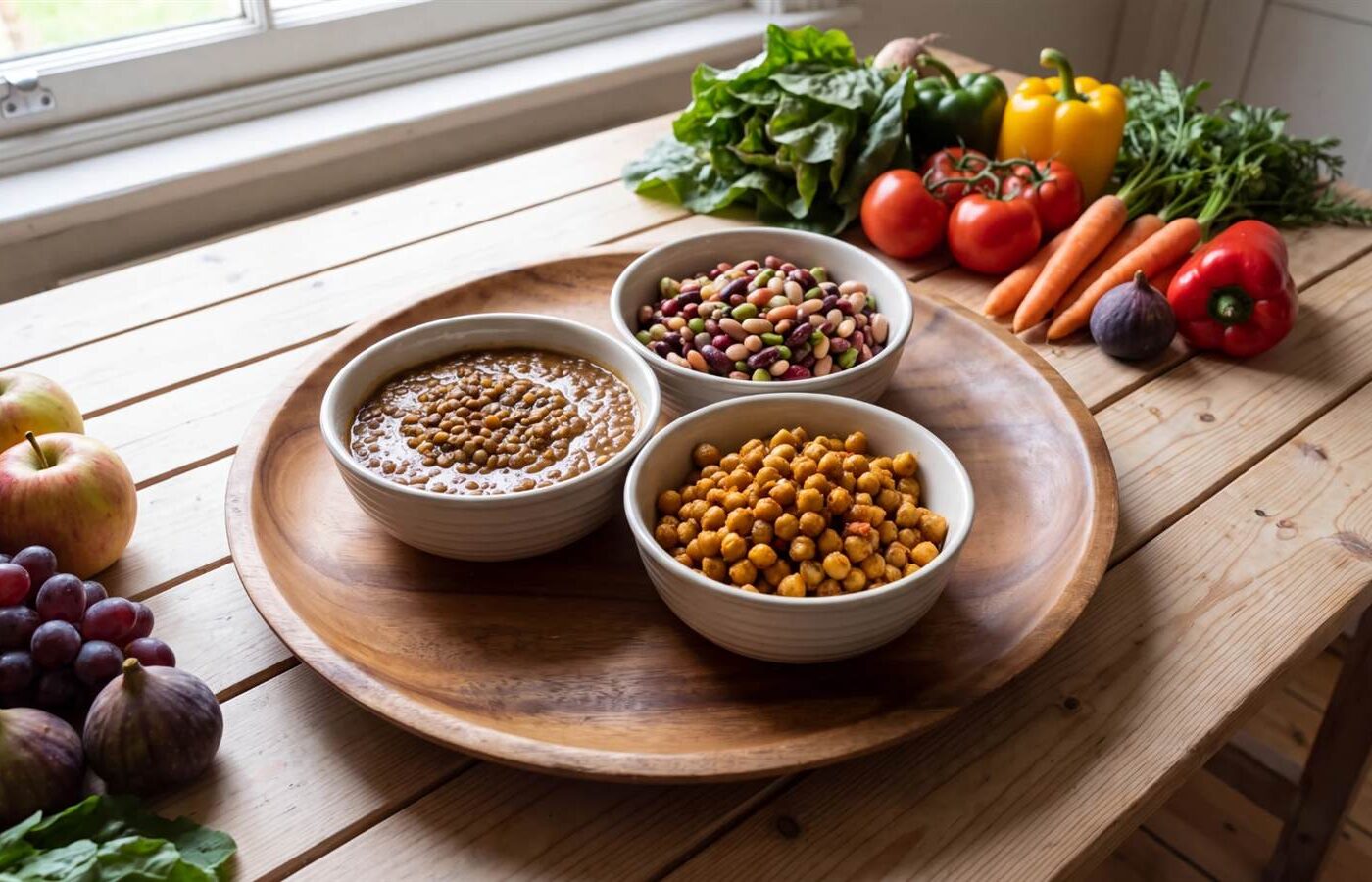
Beans, lentils, chickpeas and split peas, collectively called pulses, are cheap, shelf-stable and easy to add to a meal. They also have a reputation for keeping you full. Researchers have pulled together the trials to see if that holds up. Here is what they found, and some easy ways to eat more. This is general education, not medical advice.
Why they might fill you up
Pulses combine protein, fiber and slowly digested starch, a mix that tends to slow how quickly a meal leaves the stomach. They are also usually eaten with their cell structure intact, and, as our guide to fiber notes, most people fall short of the fiber they need.
Fullness after a meal
A review of short feeding studies pooled results from trials in which people ate a meal with or without pulses. On average, people felt about 31 percent fuller after eating roughly 160 grams of pulses (about a cup cooked) than after a comparison meal. The effect on how much people ate at their next meal was small, so the extra fullness did not clearly show up as less eating later.
Weight over several weeks
A 2016 meta-analysis in the American Journal of Clinical Nutrition by Sonia Kim and colleagues combined 21 trials with 940 participants. Diets that included pulses, at a median of about 132 grams a day (roughly one serving), produced a small average weight reduction of about 0.34 kilograms over a median of six weeks, compared with diets without them. The effect appeared in both weight-loss diets and weight-maintaining diets.
How to read that
- It is small. A third of a kilogram over a month and a half is not a transformation, and the trials were short.
- Fullness and weight were separate findings. Feeling full did not translate into much less eating at the next meal in the feeding studies.
- The better question is what they replace. Beans standing in for refined starches or processed meats is a different swap than beans added on top.
Easy ways to eat more of them
- Stir canned beans into soups, chilis and salads. Rinsing canned beans reduces some of the added salt.
- Swap half the meat in a sauce or taco filling for lentils.
- Roast chickpeas as a crunchy snack, or blend them into hummus.
- Use lentil or chickpea pasta sometimes in place of regular pasta.
- Pair them with whole grains. Our guide to whole grains has ideas.
A note on digestion
Pulses can cause gas and bloating when you are not used to them. Increase the amount gradually, drink water, and give your gut time to adjust. People with certain digestive conditions or kidney disease should ask a clinician or dietitian how much suits them.
Where they fit
Pulses are a staple in eating patterns with the best long-term track record, such as the one in our guide to the Mediterranean diet. They are not a weight-loss trick. They are an affordable, filling food that is easy to like.
Sources
- Kim SJ, de Souza RJ, Choo VL, et al. Effects of dietary pulse consumption on body weight: a systematic review and meta-analysis of randomized controlled trials. American Journal of Clinical Nutrition, 2016;103(5):1213-1223.
- Li SS, Kendall CWC, de Souza RJ, et al. Dietary pulses, satiety and food intake: a systematic review and meta-analysis of acute feeding trials. Obesity, 2014.
Weight Wire is free to read. A free account lets you save articles and use the private journal and food lookup, which are free to use too. Create my free account

Weight Wire Editorial Team
Writer at Weight Wire.