Is Fiber the Next Protein?
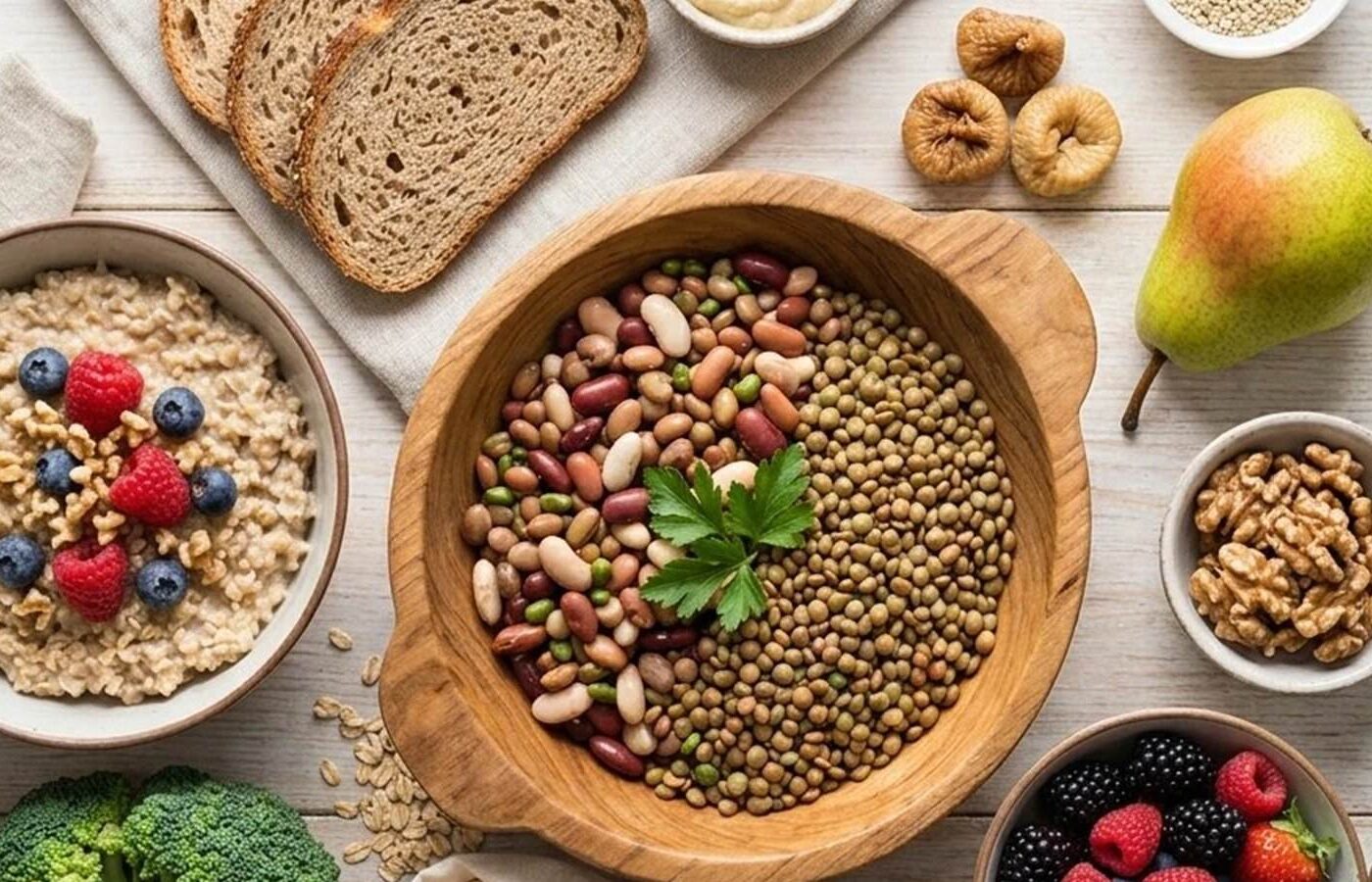
After years of “high protein” on every package, food companies and health writers have started talking about fiber. It is a fair question whether this is a real shift or just the next label trend. The good news is that the case for fiber is solid in some places, and the story is friendly and doable for almost everyone.
Most people fall short
The FDA’s Daily Value for fiber is 28 grams a day, based on a 2,000-calorie diet. The Dietary Reference Intakes put it at about 14 grams per 1,000 calories. Surveys consistently find that most Americans eat well under that, often well under 20 grams (Reynolds, 2019). A protein article we published earlier noted that protein is rarely the nutrient people are short on. Fiber is different, which means there is real room for a tasty upgrade.
The strongest case for fiber
The best-known study is a 2019 series of reviews in The Lancet by Reynolds and colleagues, covering 185 observational studies and 58 clinical trials. People who ate the most fiber had a 15% to 30% lower risk of dying from any cause, and lower rates of heart disease, stroke, type 2 diabetes and colorectal cancer, compared with those who ate the least. The benefits looked greatest at roughly 25 to 29 grams a day.
These are mostly observational findings. People who eat more fiber also tend to eat more vegetables, exercise more and smoke less, so the numbers do not prove fiber alone caused the benefit. Even so, the pattern is consistent across many studies and diseases.
What about weight?
This is where the story gets more modest.
- Observational studies link higher fiber intake with lower body weight and less weight gain over time.
- Trials that simply ask people to eat more fruit, vegetables or whole grains often show little effect on weight, possibly because they are short.
- Fiber supplements have shown small effects in some trials. One analysis found about 1.9 kg lost over roughly four months, though only a few specific fibers, such as glucomannan, show reproducible results.
The proposed reasons fiber could help include feeling full sooner and longer, slower digestion and changes in gut hormones. None of that makes fiber a weight-loss shortcut. It is better thought of as a food-quality habit that may make eating less easier.
Where fiber fits with the new guidelines
The 2025 to 2030 Dietary Guidelines for Americans, released in January 2026, stress whole foods, protein at every meal and fewer refined grains. Some nutrition experts noted that fiber got less direct attention than in earlier editions. Foods such as beans, lentils, whole grains, vegetables and fruit deliver both protein and fiber, which is one reason many dietitians describe them as a good place to start.
Easy ways to raise fiber without a supplement
- Check labels. 5% Daily Value or less per serving is low; 20% or more is high.
- Swap one refined grain a day for a whole one, such as oats, brown rice or whole-wheat bread.
- Add beans or lentils to a soup or salad.
- Keep the skin on fruit and vegetables where you can.
- Raise intake gradually and drink water. A sudden jump can cause gas and bloating.
If you have a digestive condition, a swallowing problem or a medical diet, please check with a clinician before changing your fiber intake a lot.
Where this leaves us
Fiber is not a miracle nutrient, and there is no good evidence that it melts fat. But it has some of the strongest links to long-term health in nutrition research, and most people could eat more. As a trend, it deserves the attention. As a promise of fast results, it does not, and that honesty is exactly what makes it worth trying.
Sources
- Reynolds A, Mann J, Cummings J, et al. Carbohydrate quality and human health: a series of systematic reviews and meta-analyses. The Lancet, 2019.
- U.S. Food and Drug Administration, Daily Value on the Nutrition and Supplement Facts Labels (fiber 28 g; 5% low, 20% high).
- U.S. Department of Agriculture and Department of Health and Human Services, Dietary Guidelines for Americans, 2025-2030 (dietaryguidelines.gov).
- Slavin JL. Dietary fiber and body weight. Nutrition, 2005 (PubMed 15797686).
- Coverage of expert reactions to fiber in the 2025-2030 guidelines: HCPLive and ConsultantLive, February 2026.
Weight Wire is free to read. A free account lets you save articles and use the private journal and food lookup, which are free to use too. Create my free account

Weight Wire Editorial Team
Writer at Weight Wire.