Whole Grains: What They Are and Why They Matter
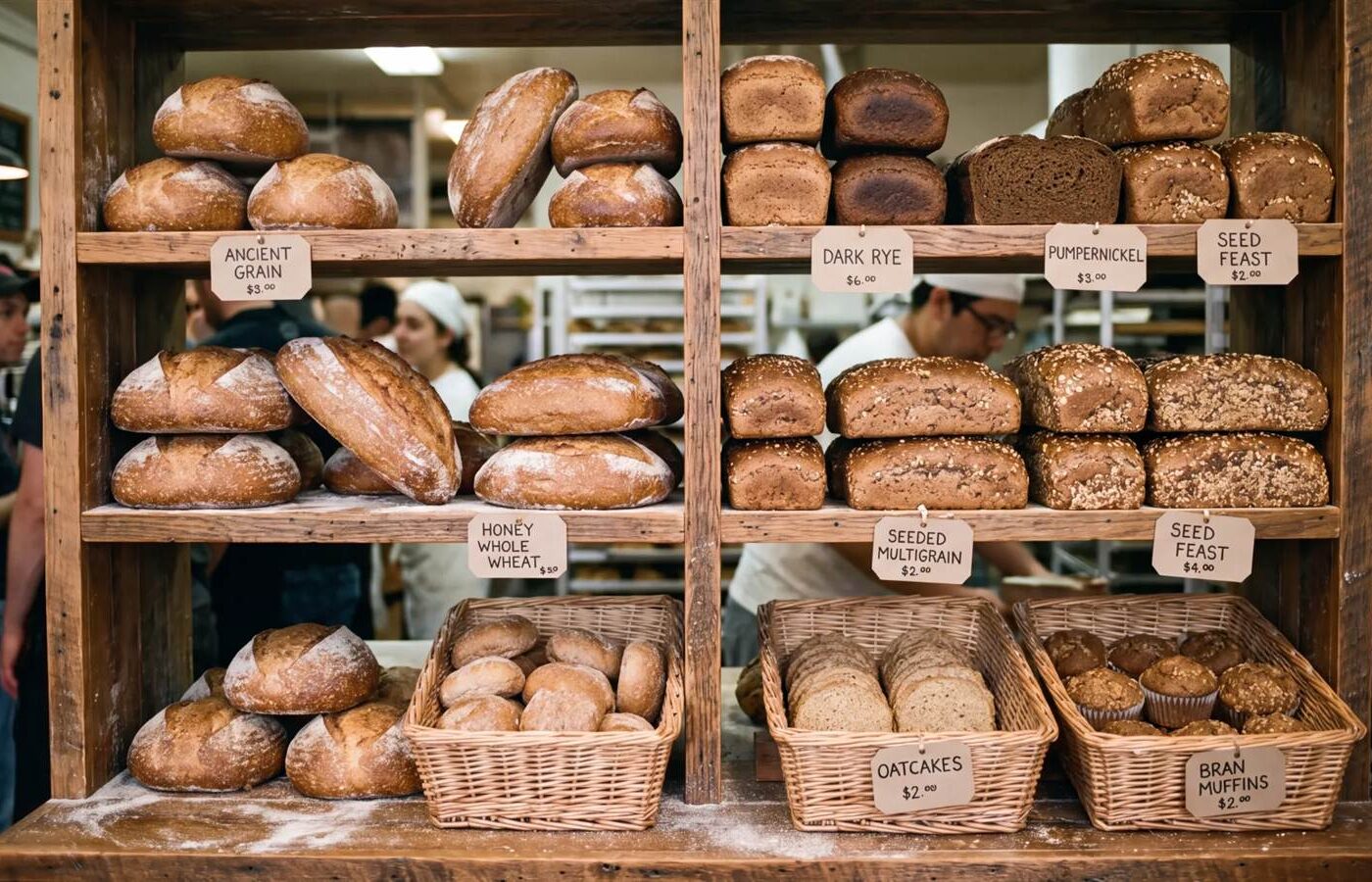
Whole grains turn up in almost every guideline for healthy eating, and in many of the largest long-term studies. The word itself can be confusing on a label, though. This guide explains what counts as a whole grain, what big studies have found, and simple ways to eat more of them. It is general education, not medical advice.
What “whole” means
A grain has three parts: the fibrous outer bran, the nutrient-rich germ and the starchy middle, called the endosperm. Whole grains keep all three. Refined grains, like white flour and white rice, have had the bran and germ removed, which takes out much of the fiber and some vitamins and minerals.
- Common whole grains: oats, brown rice, whole-wheat bread and pasta, quinoa, barley, bulgur, rye, corn and popcorn.
- Not necessarily whole: “multigrain,” “wheat bread” or “made with whole grains.” These can still be mostly refined flour.
- A good label check: look for a whole grain as the first ingredient, such as “whole wheat” or “whole oats.” Our guide to reading a nutrition label helps.
What large studies found
A 2016 review in the BMJ by Dagfinn Aune and colleagues pooled 45 prospective studies, following people over time and tracking who got sick.
- Lower risk of heart disease. People with the highest whole grain intake had about 21 percent lower risk of coronary heart disease than those with the lowest, and about 13 percent lower risk of stroke.
- A dose effect. Each additional 90 grams a day, roughly three servings, was linked to about 19 percent lower risk of coronary heart disease and about 22 percent lower risk of cardiovascular disease overall. The stroke estimate (about 12 percent lower) was less certain.
- Lower risk of death overall. The review also linked higher intake to lower risk of death from all causes.
How to read that
- These are observational studies. People who eat more whole grains often also exercise more and smoke less. The researchers adjusted for this, but it cannot be fully removed.
- The benefit may come from the whole pattern. Fiber, plants and what whole grains replace, such as refined snacks, all play a part.
- Weight effects are modest. Whole grains are not a weight-loss food, but their fiber helps with fullness. See our guide to fiber.
Easy ways to eat more
- Swap, do not add. Choose whole-wheat bread, brown rice or whole-grain pasta in place of the refined versions.
- Start the day with oats. Oatmeal or overnight oats with fruit and nuts is simple.
- Mix half and half. If whole grains are new to you, blend white and brown rice.
- Try something different. Barley in soup, quinoa in salad, popcorn as a snack.
- Watch what goes on top. Butter, sugar and large portions change the picture.
Who may need a different approach
People with celiac disease or gluten sensitivity need to avoid wheat, barley and rye, and can choose naturally gluten-free whole grains such as oats labeled gluten-free, quinoa, buckwheat and brown rice. Anyone with a medical condition that affects digestion or blood sugar should ask a clinician or dietitian for guidance.
In short
Whole grains are an easy, affordable upgrade that tends to show up alongside better long-term health. You do not need to give up white bread forever. Making half of your grains whole is a practical goal for most people.
Sources
- Aune D, Keum N, Giovannucci E, et al. Whole grain consumption and risk of cardiovascular disease, cancer, and all cause and cause specific mortality: systematic review and dose-response meta-analysis of prospective studies. BMJ, 2016;353:i2716.
- U.S. Department of Health and Human Services and U.S. Department of Agriculture. Dietary Guidelines for Americans.
Weight Wire is free to read. A free account lets you save articles and use the private journal and food lookup, which are free to use too. Create my free account

Weight Wire Editorial Team
Writer at Weight Wire.