Reading a Nutrition Label in Five Minutes
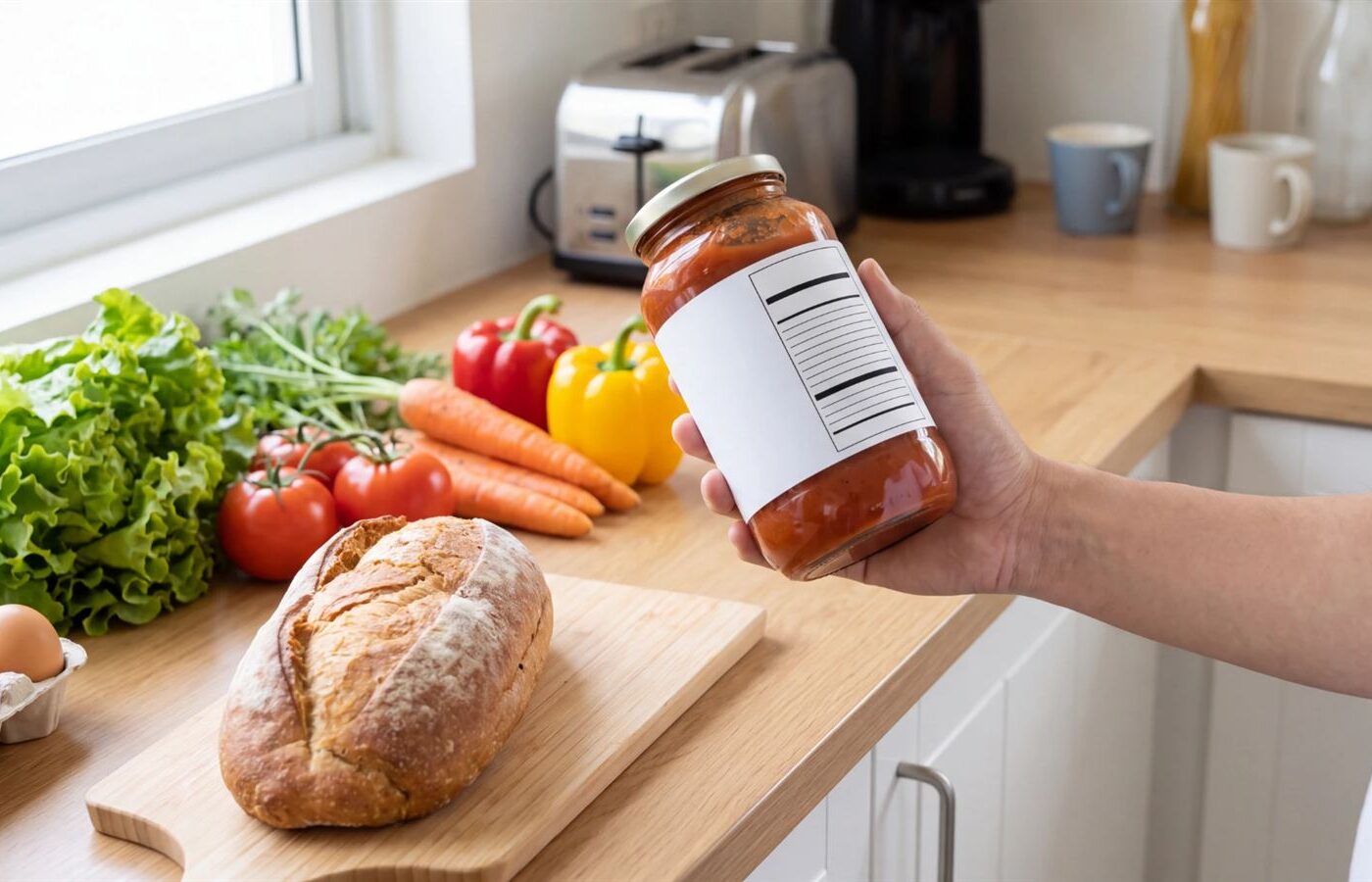
The Nutrition Facts label packs a lot into a small box, and it is easy to look at the biggest number and miss the rest. Good news: this five-minute guide, based on FDA guidance, shows you what to read first and how to compare two products quickly, so you can shop with confidence. It is general education, not medical advice, and it does not tell you what you should eat.
Step 1: Check the serving size
Every number on the label is for one serving, not the whole package. Look at two lines at the top: the serving size and the servings per container. A bag that looks like a single portion may contain two or three servings, which means the calories and everything else double or triple if you eat it all.
Step 2: Look at calories
Calories tell you how much energy one serving provides. They are handy for comparing similar foods, such as two kinds of yogurt. They do not tell you how filling a food is or what else it contains, which is why the next steps are so useful.
Step 3: Use the 5 and 20 rule
The % Daily Value (%DV) shows how much one serving contributes to a day’s worth of a nutrient. The FDA gives a simple guide:
- 5% DV or less per serving is considered low.
- 20% DV or more per serving is considered high.
The %DV is based on a 2,000-calorie reference diet, so it is a yardstick, not a personal target.
Step 4: Know which nutrients to limit and which to look for
The FDA groups nutrients in two ways:
- Get less of: saturated fat, sodium and added sugars. For these, the daily values are 20 grams of saturated fat, 2,300 milligrams of sodium and 50 grams of added sugars.
- Get more of: dietary fiber, vitamin D, calcium, iron and potassium. The fiber daily value is 28 grams. Our article on fiber explains why it gets so much attention.
Added sugars are listed separately from total sugars, so you can tell sugar that occurs naturally in milk or fruit from sugar added during manufacturing.
Step 5: Scan the ingredients list
Ingredients are listed from the largest amount by weight to the smallest. If the first few items are ones you recognize, the food is likely less processed. A long list is not automatically bad, but our guide to ultra-processed foods and weight explains why it is worth noticing.
A 30-second way to compare two products
- Make sure the serving sizes match, or adjust for the difference.
- Compare added sugars and sodium: the lower number is generally the better pick on those two.
- Compare fiber: the higher number is generally better.
- Glance at the ingredients for anything you did not expect.
What the label cannot tell you
- It does not say whether a food is right for you. That depends on your health, your needs and your medications.
- It is an estimate, and individual items can vary.
- It cannot capture how food fits into your whole day. A single label is one piece of information, not a verdict.
If you want to look up the numbers for a food or brand and add it to your private journal, our Food Lookup tool uses USDA and Open Food Facts data.
If counting or checking numbers ever starts to feel stressful or out of your control, a licensed professional can help. In the U.S. you can call or text 988 at any time.
In short
Check the serving size, use the 5 and 20 rule, compare added sugars, sodium and fiber, and read the ingredients. That is enough to make most labels useful in about the time it takes to put the box back on the shelf, and you will feel like a label-reading pro in no time.
Sources
- U.S. Food and Drug Administration, How to Understand and Use the Nutrition Facts Label.
- U.S. Food and Drug Administration, Daily Value on the Nutrition and Supplement Facts Labels.
Weight Wire is free to read. A free account lets you save articles and use the private journal and food lookup, which are free to use too. Create my free account

Weight Wire Editorial Team
Writer at Weight Wire.