GuideScience & Research
The Biggest Loser Study and Metabolic Adaptation
A six-year follow-up of 14 contestants found their resting metabolism stayed lower than expected. What that does and does not mean.
What the studies actually say about metabolism, appetite, hormones and weight.
A six-year follow-up of 14 contestants found their resting metabolism stayed lower than expected. What that does and does not mean.
The idea that a 500-calorie daily cut means a pound a week is tidy but misleading. Here is how the body adapts and what a better rule of thumb looks like.
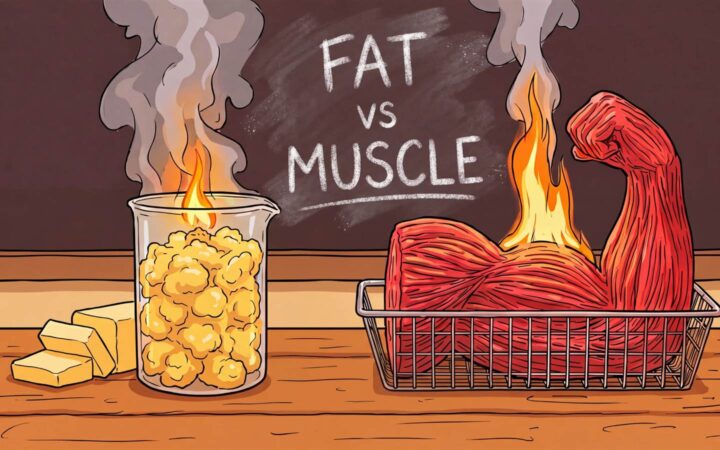
Muscle burns more than fat at rest, but the difference is smaller than the slogan suggests. The real numbers, and why muscle still matters.
Chemistry shows that most of the fat you lose leaves through your lungs as carbon dioxide.
Why the calories on a label are estimates, and what an almond experiment showed about absorption.
Eating costs energy. Your body spends some of the calories in a meal just to chew, digest, absorb and store it. This is called…
A common picture of weight loss is that fat cells empty out and then wait to refill. It raises a fair question: do you…
When people think about burning calories, they usually think of workouts. But for most people, the energy used in exercise is a small slice…
A randomized trial tested a gut bacteria transplant for weight loss. Here is how it turned out and how to read it.
What twin studies, gene studies and a recent review say about how much genes shape body weight, and what they do not decide.