Being Kind to Yourself After a Slip
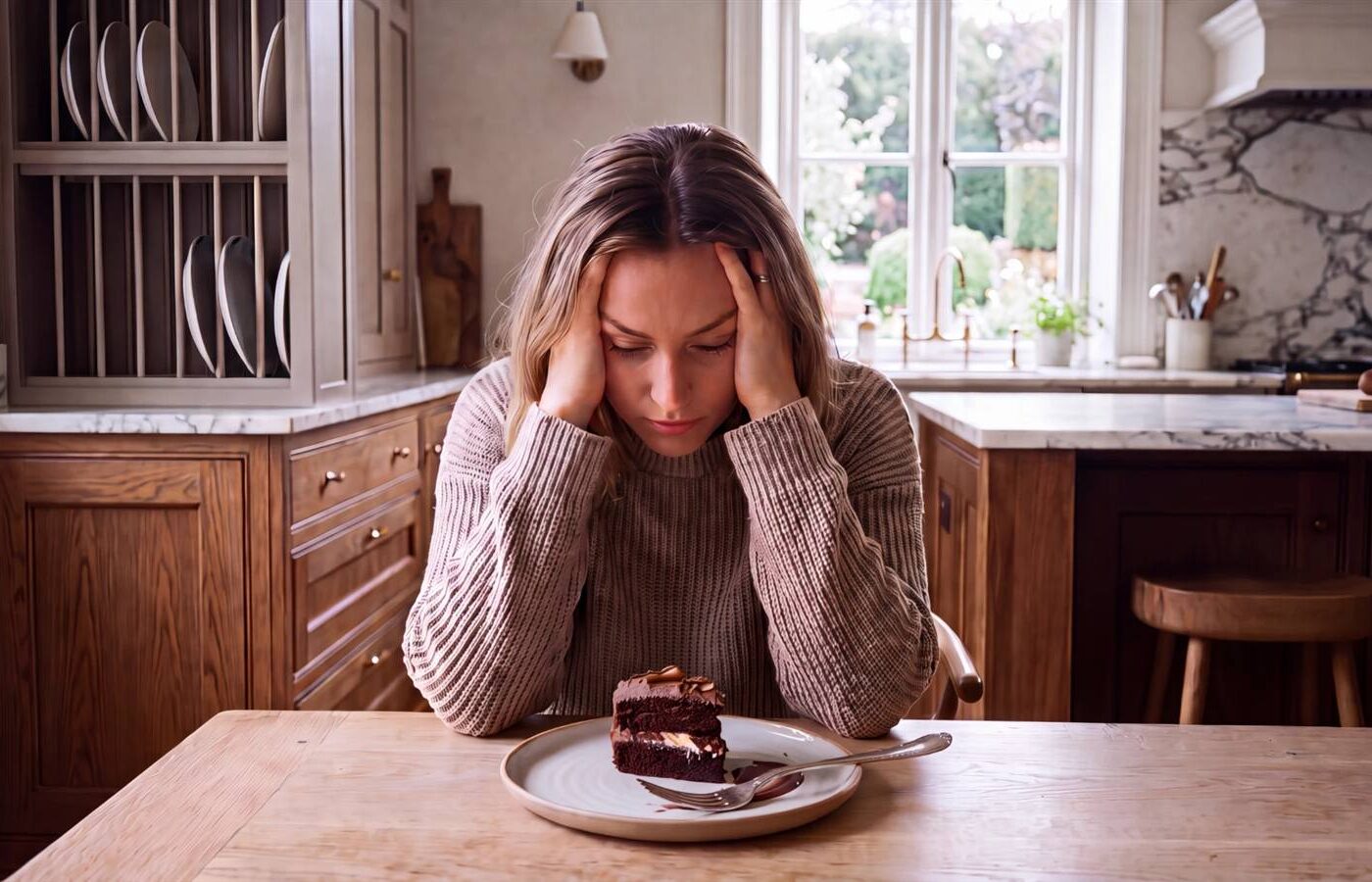
Most of us have had the moment: you eat more than you planned, skip the workout, or slip from a goal, and an inner voice declares that you have blown it. That voice often leads to more of the very thing you wanted to avoid. Psychologists have studied a different response, self-compassion, and what it does to eating and stress. This is general education, not medical advice or therapy.
What self-compassion is
Psychologist Kristin Neff describes self-compassion as three parts working together:
- Kindness toward yourself instead of harsh self-criticism.
- Common humanity, the recognition that everyone struggles and slips, so you are not alone.
- Mindfulness, noticing a painful feeling without blowing it up or pushing it away.
It is not self-indulgence or lowering your standards. It is how you would talk to a friend who had a hard day.
An experiment about eating
In 2007, Claire Adams and Mark Leary published a study in the Journal of Social and Clinical Psychology with college women. Participants completed measures of how restrictive they were with food and how guilty they felt after eating unhealthily. Some were then asked to eat a food that many people consider off-limits, and some of those were given a short, kind message encouraging them to think about the experience in a self-compassionate way. Afterwards, everyone had a chance to eat more.
- Distress went down. The self-compassion message reduced how upset participants felt after eating the food.
- Eating afterward was lower among strict dieters. Among the women who were most restrictive with food, those given the self-compassion message ate less afterwards than those who were not.
- The researchers’ conclusion: a kinder attitude may make it easier to move on after a slip, not harder.
Why guilt backfires
When you feel ashamed after a lapse, it can set off a cycle: feeling bad leads to wanting comfort, and food, a screen or avoidance offers it. Strict rules make one slip feel like a total failure, and “I have already blown it” becomes a reason to carry on. Kindness interrupts the cycle.
Limits of the research
- It was a small laboratory study in young women, using a single session.
- The effect was clearest in people who were strict about food.
- It is not a treatment. For binge eating, purging or intense distress about food or body image, a licensed professional can offer help that a mindset cannot.
Small ways to practice
- Use a friend test. Ask what you would say to someone you care about in your place, and say that to yourself.
- Name the moment. “This is a hard moment” is a simple, honest start.
- Drop the verdict. Replace “I failed” with “That didn’t go to plan; what would help next?”
- Take the next small step. A glass of water, a walk, the next meal as usual.
- Write it down. A line in your journal can turn an attack into an observation. Our guide to gratitude journaling has related ideas.
Related reading
If stress drives eating, see our guide to stress eating. For how shame affects health more broadly, read weight stigma, and for why new habits take time, how long a habit takes.
In short
Being kind to yourself after a slip is not letting yourself off the hook. It is often what keeps one off-plan meal from becoming a lost week. Progress tends to come from getting back on track gently and quickly.
Sources
- Adams CE, Leary MR. Promoting self-compassionate attitudes toward eating among restrictive and guilty eaters. Journal of Social and Clinical Psychology, 2007;26(10):1120-1144.
- Neff KD. Self-compassion: an alternative conceptualization of a healthy attitude toward oneself. Self and Identity, 2003;2(2):85-101.
Weight Wire is free to read. A free account lets you save articles and use the private journal and food lookup, which are free to use too. Create my free account

Weight Wire Editorial Team
Writer at Weight Wire.