Alcohol and Weight: Why a Drink Can Change How Much You Eat
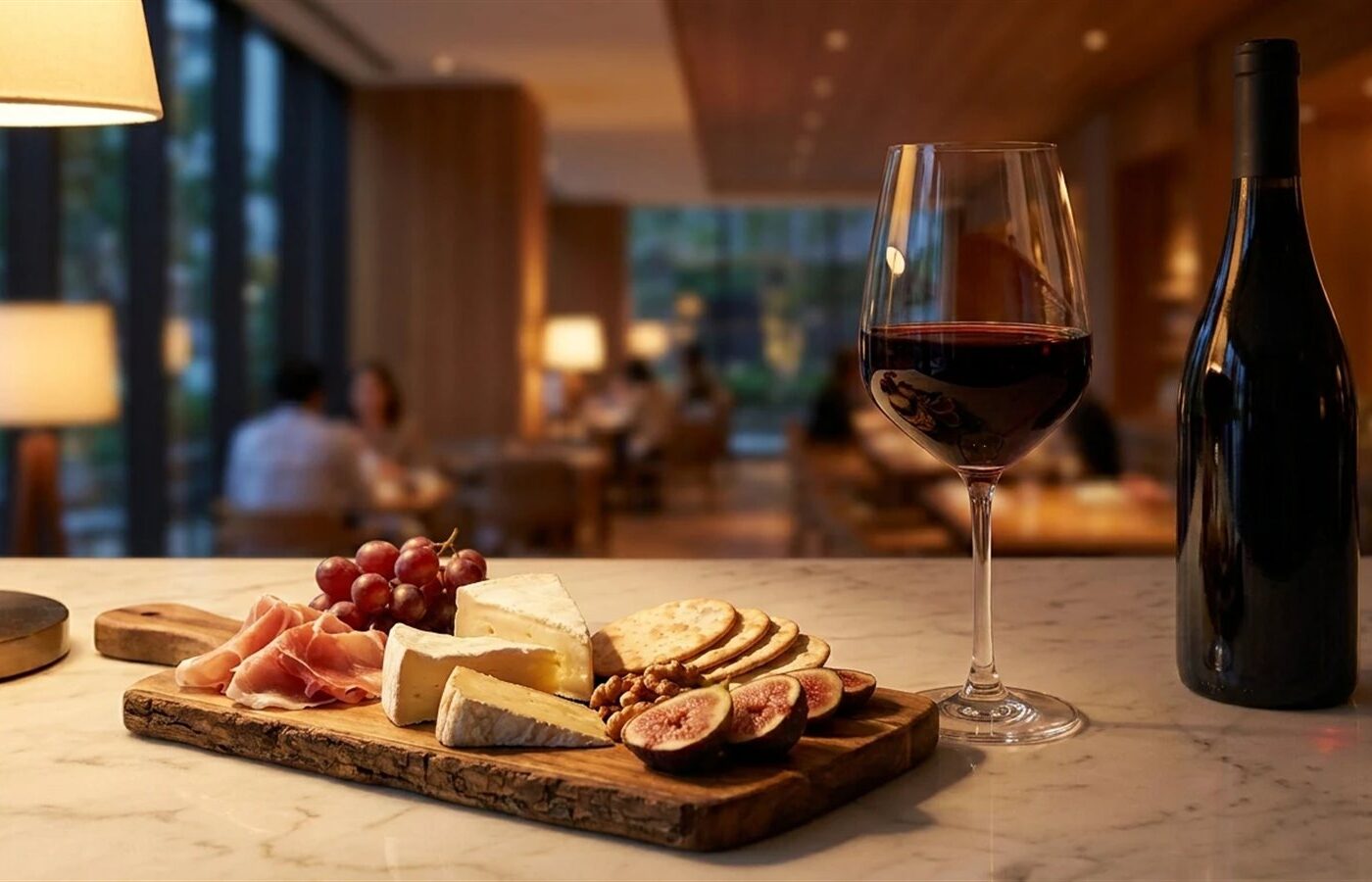
Calories in a drink are only part of the story. Researchers have also asked whether having a drink changes how much people eat afterward. This guide looks at what controlled experiments found, how that fits with the longer-term picture, and some practical ways to think about it. It is general education, not medical advice.
What alcohol brings to the table
Alcohol carries calories of its own, and those calories add to everything else a person eats and drinks. It is also a calorie that people do not seem to make up for later by eating less. That is the idea scientists have tested directly.
The experiments
A 2019 review in the British Journal of Nutrition by Kwok and colleagues searched for experiments in which healthy adults were given a dose of alcohol or a non-alcoholic comparison drink. From more than 18,000 papers, 22 studies with 701 participants were included.
- No offsetting. Across studies, people did not eat less food after alcohol to make up for its calories.
- More food. In a combined analysis of 12 studies, alcohol increased food energy intake by about 343 kilojoules, roughly 80 calories, compared with a non-alcoholic drink.
- More energy overall. Total energy intake, which includes the drink, rose by about 1,072 kilojoules, roughly 255 calories.
The authors concluded that adults do not adequately offset alcohol’s energy by eating less, and that even a relatively modest dose of alcohol may increase how much people eat.
Long-term weight is more complicated
The same review notes that heavy and regular drinking is linked with higher body weight, but it is hard to say whether the alcohol itself or the extra food eaten alongside it is responsible. The long-term link also seems to depend on how much someone drinks, the type of drink, and sex. In other words, a single drink is unlikely to be a turning point, and patterns over time matter more than any one evening.
Where the evidence runs thin
- The people studied were mostly young. Results apply mainly to adults aged 18 to 37.
- The experiments were short. They measured eating after a drink, not weight over months.
- Some results varied a lot. The authors point to substantial differences between studies in some outcomes.
Ways to use this
- Notice the pairing. Drinks often come with snacks, larger portions and later nights. Seeing the pattern is the first step.
- Plan the food, not just the drink. Eating a satisfying meal first can make it easier to enjoy a drink without much extra snacking. Our guide to building a balanced plate has ideas.
- Mind the sleep. Alcohol can disturb sleep, and short sleep changes appetite; see our guide to sleep and weight.
- Try swaps you like. Sparkling water with citrus or a nonalcoholic option can be a pleasant alternative on some evenings, with no rules attached.
- Check your own comfort. If drinking feels hard to control, a licensed professional can help. In the U.S., the SAMHSA National Helpline is free and open every day at 1-800-662-4357.
The takeaway
Experiments suggest that alcohol adds calories and also nudges people to eat more, rather than less, at the time. That is useful to know, not a reason for guilt. A little awareness around food and drinks can go a long way.
Sources
- Kwok A, Dordevic AL, Paton G, Page MJ, Truby H. Effect of alcohol consumption on food energy intake: a systematic review and meta-analysis. British Journal of Nutrition, 2019;121(5):481-495.
Weight Wire is free to read. A free account lets you save articles and use the private journal and food lookup, which are free to use too. Create my free account

Weight Wire Editorial Team
Writer at Weight Wire.