Sleep Trackers: How Much Can They Really Tell You?
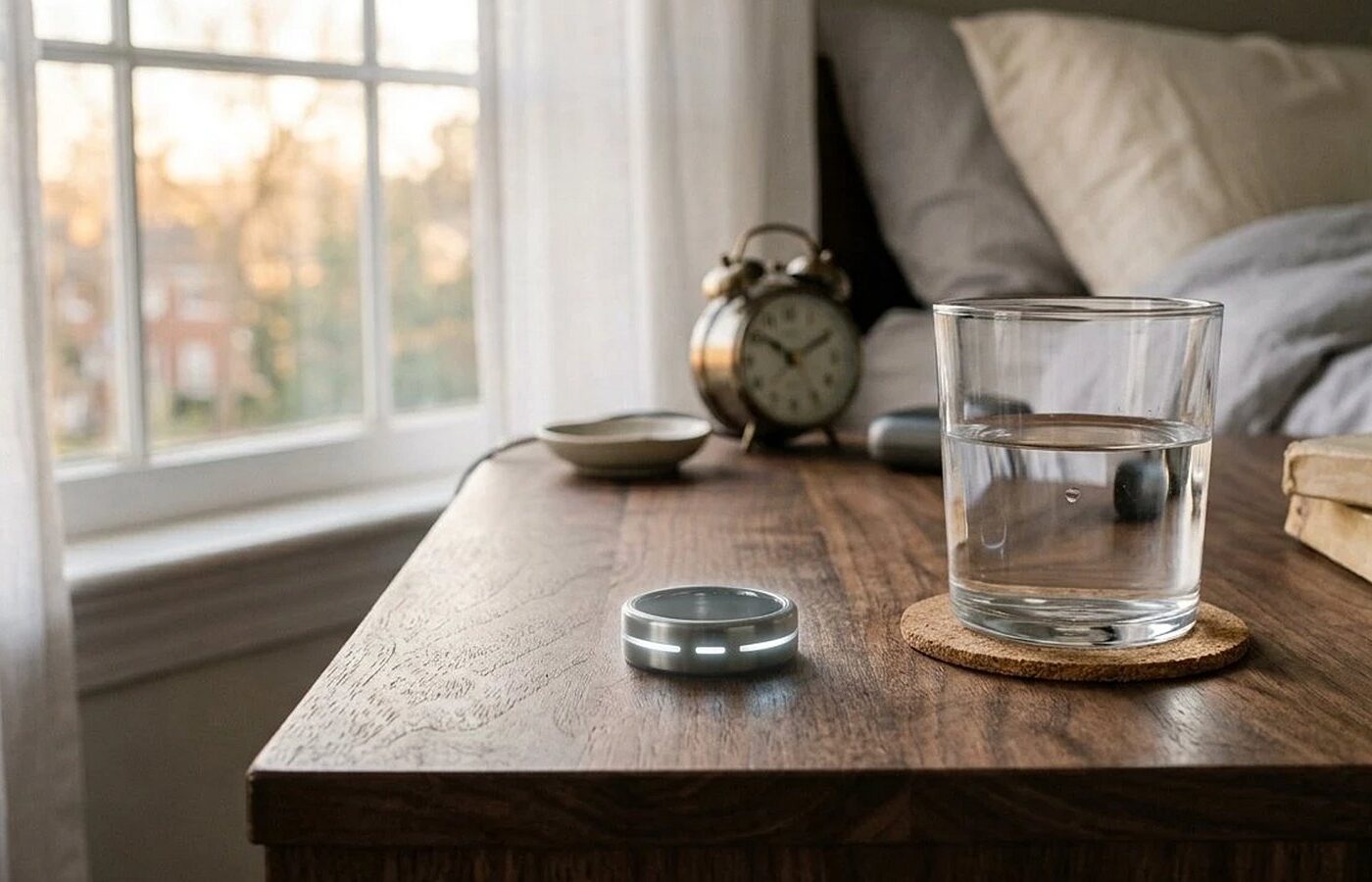
Wearable sleep tracking has become one of the most popular features on watches, rings and bands. Every morning you get a score, a stage breakdown and a chart. It is worth knowing which parts of that report are reasonably reliable and which are closer to educated guesses. This follows our look at what smart rings and wearables can and cannot tell you.
How trackers work
Most consumer devices combine two sensors: an accelerometer, which detects movement, and an optical sensor that reads pulse and its variation. Software uses those signals to estimate when you are asleep and which stage you are in. They do not measure brain activity, which is how sleep is staged in a sleep lab.
The gold standard
The reference method is polysomnography (PSG), done overnight in a lab. It records brain waves, eye movement, muscle tone, breathing and heart rhythm, and trained scorers label each 30-second segment of the night as wake, light, deep or REM sleep. Researchers test wearables by comparing them with PSG.
How well do trackers match a sleep lab?
A 2024 study of the Verily Study Watch compared it with PSG in 41 adults who did not have sleep apnea or insomnia. The watch was very good at identifying sleep: it correctly labeled about 97% of the sleep segments. It was much worse at identifying wakefulness, picking up roughly 70% of the time awake. On four-stage classification (wake, light, deep, REM), agreement was moderate, with a Cohen’s kappa of 0.64.
That pattern shows up across the research. Trackers generally:
- Do well at telling roughly when you fell asleep and woke up, and your total time in bed.
- Tend to overestimate sleep, because lying still while awake can look like sleep.
- Are less accurate for stages, particularly deep and REM, so the numbers can swing from night to night without any real change.
- Vary by device and software update, so a result for one product does not apply to another.
The study was a single night in a lab with healthy adults. Real life, with different sleepers, partners, pets and a changing algorithm, is messier.
How to use the data
- Look at trends, not single nights. A week or month of average sleep time tells you more than one score.
- Treat stage percentages cautiously. A drop in “deep sleep” on one night is not a diagnosis.
- Use it to notice habits. Many people find that seeing a late bedtime on a chart nudges them to go to bed earlier.
- Trust how you feel. If you feel rested after a “bad” score, the score is probably the problem.
A caution about sleep anxiety
Some people become preoccupied with perfect scores, and that worry can itself make sleep worse. If tracking increases your stress, it is fine to take the device off at night.
When to talk to a clinician instead
A tracker cannot diagnose sleep apnea, insomnia or other sleep disorders. Loud snoring, gasping, long pauses in breathing, or feeling unrefreshed after what should be enough sleep are reasons to ask a doctor. The National Heart, Lung, and Blood Institute lists them as signs to see a healthcare provider. Our guide to sleep basics from NIH covers the habits that matter most.
The big picture
Wearables are decent at counting hours and spotting patterns, and not very reliable at naming sleep stages. Use them as a diary, not a diagnosis.
Sources
- Saeb S, et al. (including de Zambotti M). Performance of the Verily Study Watch in measuring sleep compared with polysomnography. 2024 (PMC12713921).
- Validation framework for sleep stage scoring in wearable sleep trackers with polysomnography ground truth. 2021 (PMC8161815).
- de Zambotti M, et al. Wearable sleep technology in clinical and research settings.
- National Heart, Lung, and Blood Institute (nhlbi.nih.gov), sleep health pages.
Weight Wire is free to read. A free account lets you save articles and use the private journal and food lookup, which are free to use too. Create my free account

Weight Wire Editorial Team
Writer at Weight Wire.