If-Then Plans: A Simple Way to Follow Through
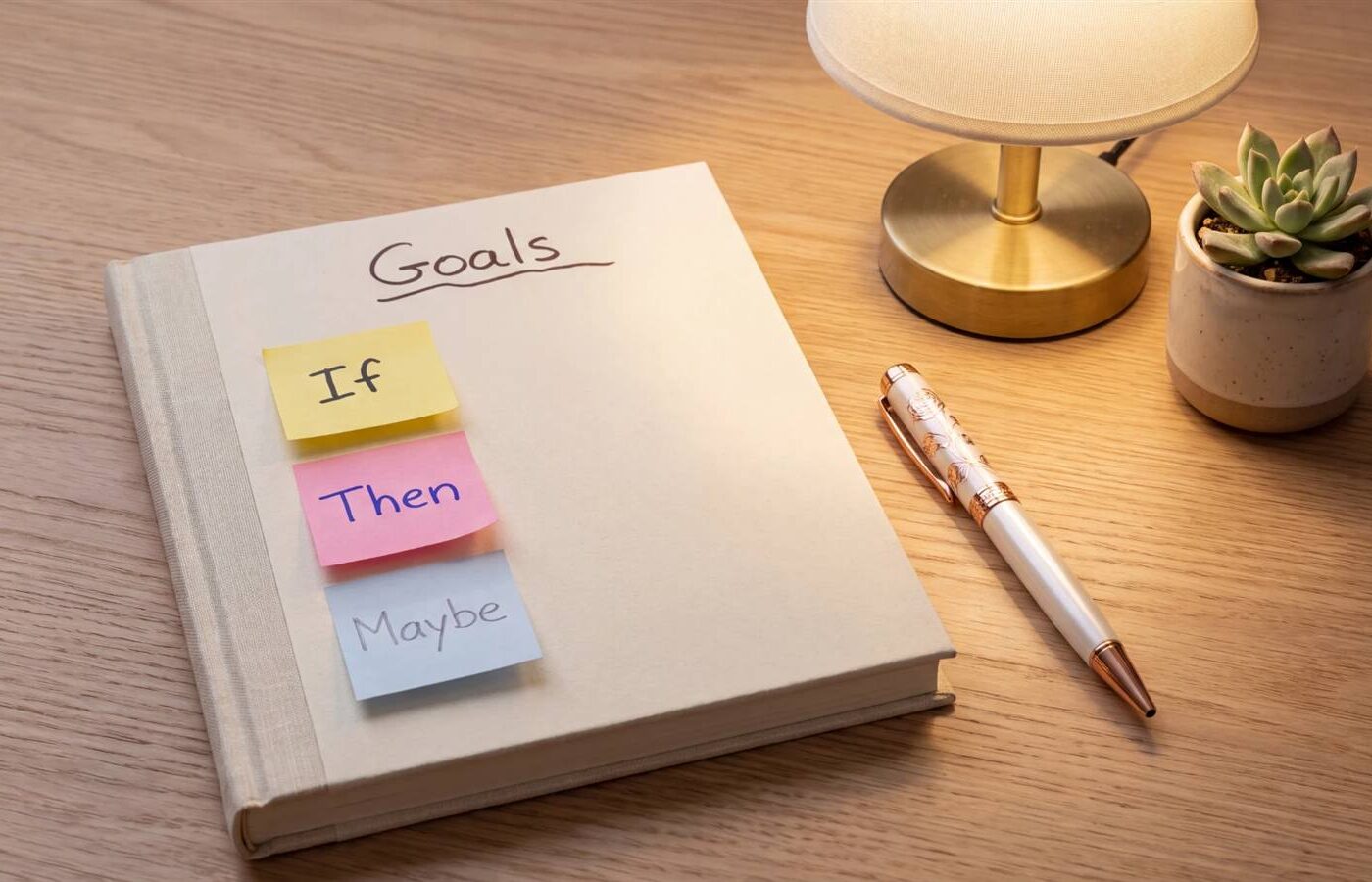
Most of us are good at setting goals and less good at following through when life gets busy. Psychologists have studied a simple trick that helps bridge the gap: deciding in advance exactly when and where you will act. It is called an implementation intention, or more simply, an if-then plan. This is general education, not medical advice or therapy.
What an if-then plan is
A goal says what you want (“I will move more”). An if-then plan adds the cue and the action: “If it is 3 p.m. and I feel like a snack, then I will drink a glass of water and take a short walk first.” The “if” ties the plan to a specific moment, so you do not have to decide on the spot or rely on willpower.
How well it works
Psychologist Peter Gollwitzer developed the idea, and in 2006 he and Paschal Sheeran published a meta-analysis that pooled 94 independent tests across areas such as health behavior, studying and personal habits. People who made if-then plans were more likely to reach their goals than people who only set the goal, with an average effect size of about 0.65, which researchers describe as medium to large.
Why it may work
- It removes a decision. The plan was made when you were calm, so you act more automatically in the moment.
- It makes the cue stand out. Having decided on a situation in advance, you are more likely to notice it.
- It handles obstacles. You can plan for the predictable ones: “If I am too tired after work, then I will do five minutes instead.”
Examples you can borrow
- Movement: “If I finish lunch, then I will walk for ten minutes.” (See how much walking is enough.)
- Food: “If I am cooking dinner, then I will put vegetables on the plate first.”
- Tracking: “If I sit down with my evening drink, then I will write a few lines in my journal.” See why it is good to keep a food journal.
- Setbacks: “If I slip, then I will treat myself the way I would treat a friend and get back on track at the next meal.” See being kind to yourself after a slip.
Limits
- It needs a goal you care about. A plan will not make you do something you do not want to do.
- The effect size is not a percentage. An effect of 0.65 does not mean a 65 percent higher chance of success; it describes the average difference between groups.
- Most studies were short. Making a habit stick over months takes time. See how long a new habit takes.
- It is not a treatment. If eating or mood feels out of control, a licensed professional can help in ways a planning tip cannot.
Try one this week
Pick one small goal. Write a sentence in the form “If (situation), then I will (action).” Keep it specific and easy. If it works, keep it; if it does not, change the cue or shrink the action and try again.
Sources
- Gollwitzer PM, Sheeran P. Implementation intentions and goal achievement: a meta-analysis of effects and processes. Advances in Experimental Social Psychology, 2006;38:69-119.
- Gollwitzer PM. Implementation intentions: strong effects of simple plans. American Psychologist, 1999;54(7):493-503.
Weight Wire is free to read. A free account lets you save articles and use the private journal and food lookup, which are free to use too. Create my free account

Weight Wire Editorial Team
Writer at Weight Wire.