Fat Cells: How Many You Have and What Happens When You Lose Weight
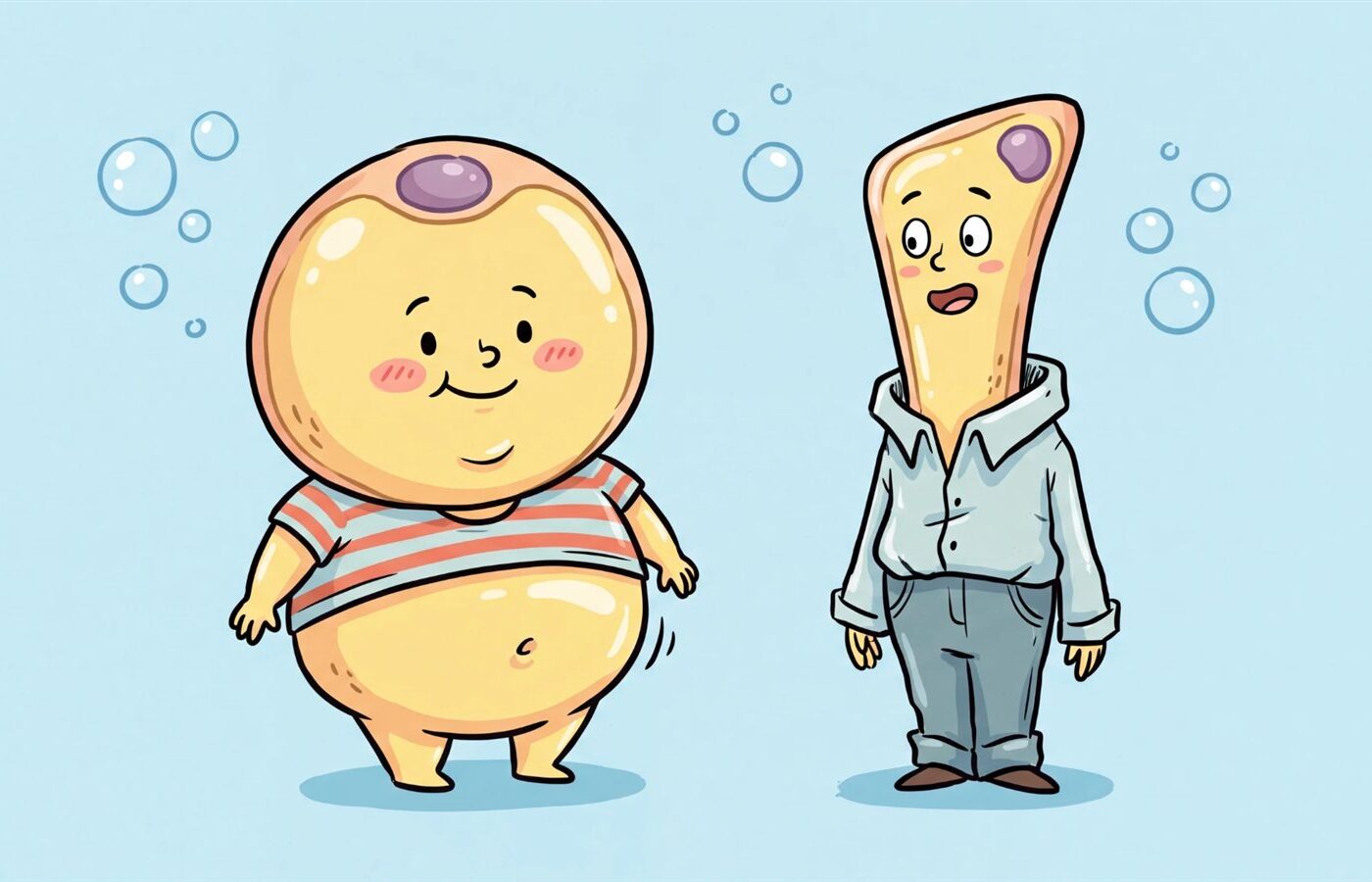
A common picture of weight loss is that fat cells empty out and then wait to refill. It raises a fair question: do you lose fat cells when you lose weight, or just shrink them? A well-known 2008 study answered that by dating the cells with a clever trick from the Cold War era. Here is what it found and why it matters. This is general education, not medical advice.
Dating cells with bomb tests
Researchers at the Karolinska Institute in Sweden, led by Kirsty Spalding and Jonas Frisén, used an unusual tool. Above-ground nuclear tests between 1955 and 1963 released a pulse of carbon-14 into the air, which entered the food chain and then every cell’s DNA at the time the cell was formed. By measuring carbon-14 in DNA from fat tissue, the team could estimate how old the cells were. They did this in fat samples from 35 people, and counted fat cells in 687 adults, combining their data with published data on children.
What they found
- The number of fat cells is set by early adulthood. It rises through childhood and adolescence, then stays about the same in adults, in lean and obese people alike.
- People with obesity tend to have more fat cells. That difference appears to be established early in life.
- Fat cells are replaced steadily. The typical turnover was about 8 percent a year, so roughly half of the cells in an adult are replaced over around eight years.
- Turnover was similar in lean and obese people. People with obesity added more new cells each year in absolute terms, but the proportion replaced was about the same.
- After weight-loss surgery, fat volume fell but the number of cells did not. The cells got smaller.
What this means
- Weight change mostly changes cell size. Gaining or losing weight as an adult mainly makes fat cells larger or smaller, not more or fewer.
- The number may help explain why weight tends to return. The cells are still there, ready to fill again. That fits with what we know about plateaus and with the idea of a set point.
- Early life may matter. The study suggests that childhood and adolescence are when the number is set, which is one reason researchers focus on young people.
Limits to keep in mind
- It is one set of samples. The study was small for the cell-dating part, and the people studied were not a perfect cross-section.
- Averages hide differences. Individuals will vary.
- It does not mean weight is fixed. People do lose weight and maintain it. The study says that the number of cells is stable, not that weight cannot change.
- Fat is not just storage. It is an active organ that sends hormonal signals, as discussed in our guide to appetite hormones.
A kinder way to think about it
If fat cells shrink and do not disappear, then weight regain is not a personal failing. It is partly biology. That is useful to know for anyone who has lost weight and found it hard to keep off, and it points to the value of steady habits and support over quick fixes.
In short
You are born, and then grow, with a certain number of fat cells, and they renew gradually through life. Weight loss in adulthood largely changes their size. Knowing that can make the journey feel less mysterious and more understandable.
Sources
- Spalding KL, Arner E, Westermark PO, et al. Dynamics of fat cell turnover in humans. Nature, 2008;453(7196):783-787.
- Karolinska Institutet news release on the study, 2008.
Weight Wire is free to read. A free account lets you save articles and use the private journal and food lookup, which are free to use too. Create my free account

Weight Wire Editorial Team
Writer at Weight Wire.