Approved vs. Compounded: How GLP-1 Medications Are Regulated
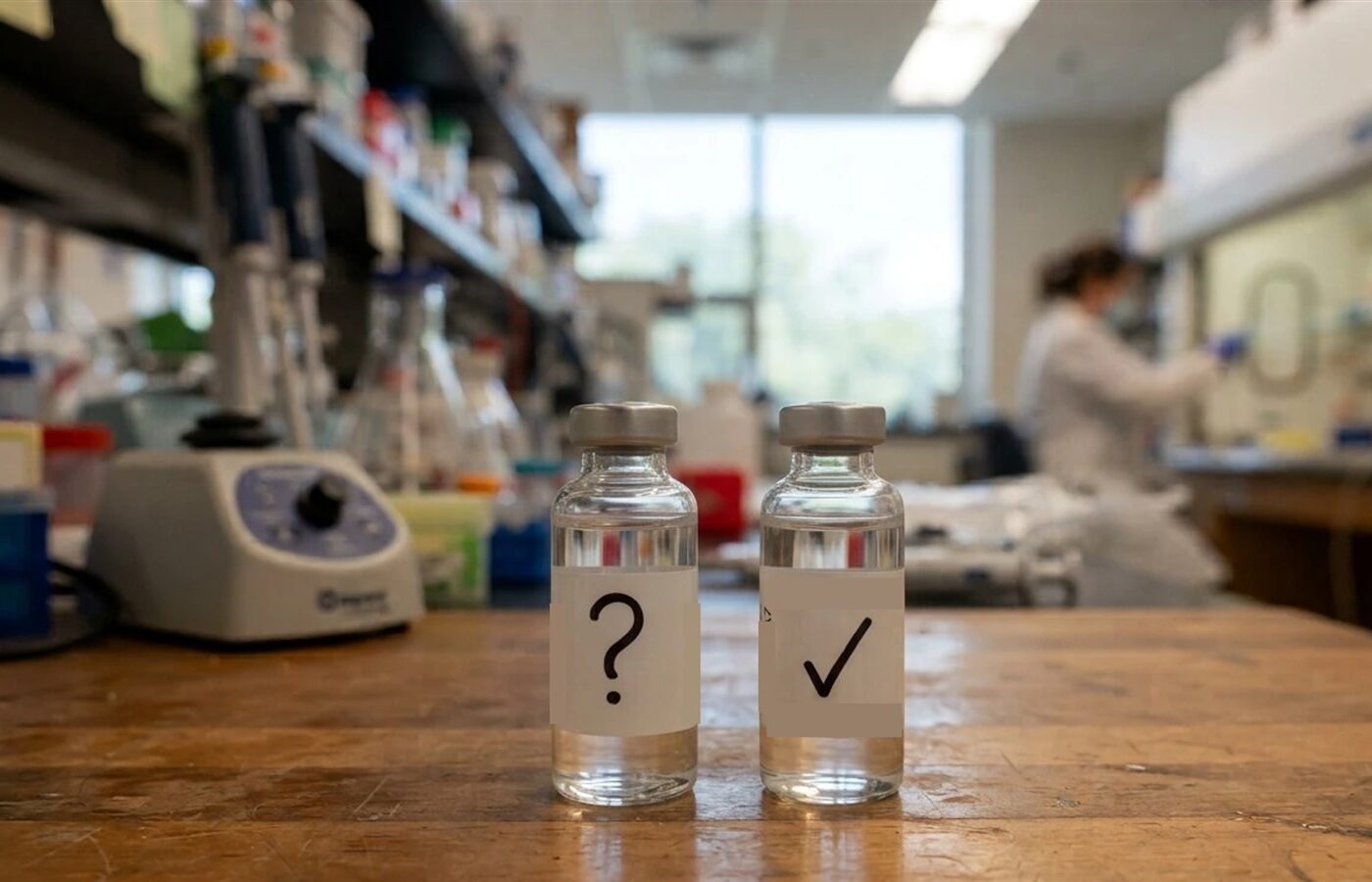
If you follow GLP-1 news, you have probably seen two words used side by side that mean very different things: approved and compounded. Knowing the difference can make the headlines much easier to follow. This guide explains the terms and what the U.S. Food and Drug Administration (FDA) has said publicly. It does not recommend any product, pharmacy or provider.
What “FDA approved” means
Before a new drug can be sold in the U.S., its maker has to show the FDA evidence from clinical trials that it works for a stated use and that its benefits outweigh its risks. The agency also reviews how the drug is manufactured, what the label says, and how consistent each batch is. After approval, the maker must keep reporting safety problems.
Semaglutide and tirzepatide, the two active ingredients behind the best-known GLP-1 medications, went through that process. The large trials behind them are covered in our explainer on the research.
What compounding is
Compounding is when a pharmacist or physician prepares a medication for an individual patient instead of dispensing a mass-produced one. It has a long, legitimate role: for example, making a liquid version for someone who cannot swallow a pill, or leaving out a dye a patient is allergic to.
The key point, according to the FDA, is that compounded drugs are not FDA approved. The agency does not review them for safety, effectiveness or quality before they reach a patient.
Why compounded GLP-1s appeared
When demand for semaglutide and tirzepatide outran supply, both appeared on the FDA’s drug shortage list. During a shortage, the FDA has allowed pharmacies more room to compound copies of a drug in short supply. The FDA later announced that the tirzepatide shortage had ended in late 2024 and the semaglutide shortage in early 2025, and it set deadlines after which most compounding of copies was expected to stop. Court cases followed. Check the FDA’s current pages for the latest status, because this area has changed several times.
What the FDA says about safety
The FDA has published a page about its concerns with unapproved GLP-1 drugs. Among the points it makes:
- Compounded drugs are not FDA approved, so they have not been checked for safety, effectiveness or quality in the way approved drugs are.
- Some products sold online have been fraudulent, with false pharmacy labels.
- Some compounded versions use different salt forms of the active ingredient, and the agency says there is a lack of safety data for them.
- Dosing mistakes have caused harm. The agency describes patients measuring and injecting the wrong amount, and prescribers ordering doses above what approved labels allow, which led to nausea, vomiting and medical care.
- As of the page’s May 2026 count, the FDA had received roughly 990 adverse event reports for compounded semaglutide and more than 730 for compounded tirzepatide.
Adverse event reports are voluntary and do not prove a product caused the problem, and the count does not tell you how common problems are. But the FDA treats the pattern as a reason for caution.
When the FDA says compounding is appropriate
The agency says compounded drugs should be used only when a patient’s medical needs cannot be met by an FDA-approved drug. That decision belongs to a licensed prescriber who knows the patient’s history.
Questions worth asking a licensed clinician
If you are ever offered a GLP-1 product, these friendly questions can help you feel confident about what you are getting:
- Is the product I am being offered FDA approved or compounded?
- Who makes it, and who dispenses it?
- What exact dose and device will I use, and how do I measure it?
- How should it be stored, and for how long is an opened vial usable?
- What side effects mean I should call someone?
Putting it together
“Approved” and “compounded” describe two different levels of review. Knowing the difference helps you read the news and ask better questions. Decisions about whether any medication is right for you belong with a licensed clinician.
Sources
- U.S. Food and Drug Administration, “FDA’s Concerns with Unapproved GLP-1 Drugs Used for Weight Loss” (fda.gov, Drug Alerts and Statements; page updated October 2026).
- U.S. Food and Drug Administration, drug shortage and compounding pages for semaglutide and tirzepatide (fda.gov), for the current shortage and enforcement status.
- Reporting on the 2025 end of the shortages and court rulings: TechTarget and Pharmaceutical Technology news coverage, 2025.
Weight Wire is free to read. A free account lets you save articles and use the private journal and food lookup, which are free to use too. Create my free account

Weight Wire Editorial Team
Writer at Weight Wire.