Do Step Challenges and Badges Get You Moving?
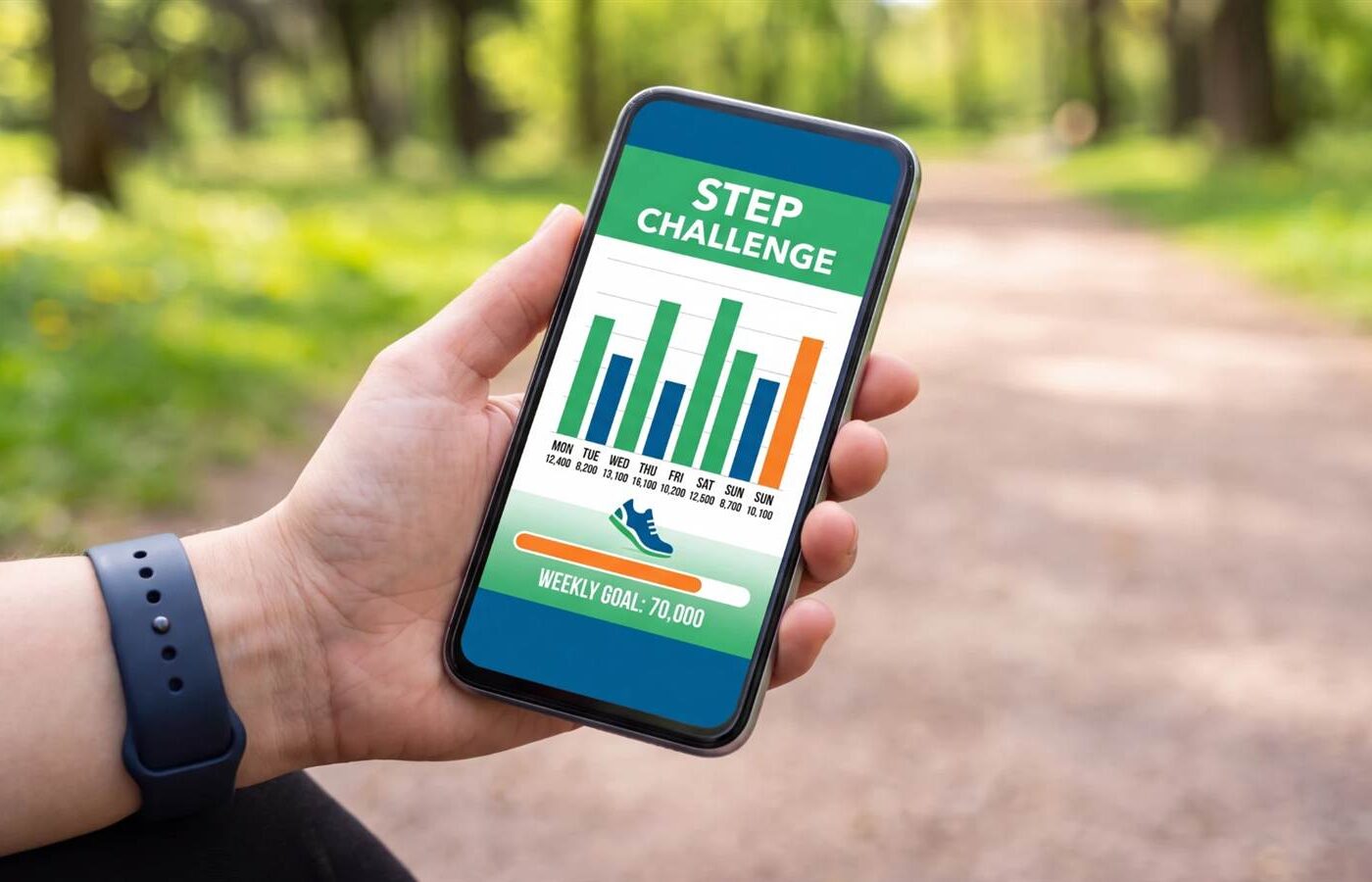
Many fitness apps and trackers turn exercise into a game: streaks, badges, leaderboards, step challenges with friends. It is fun, but does it actually get people moving, or does the novelty wear off? Researchers have pooled the trials to find out. This is general education, not medical advice.
What “gamification” means here
Gamification is the use of game features, such as points, levels, rewards and competition, in something that is not a game. In fitness apps, it usually shows up as daily step goals, achievement badges, weekly challenges and rankings against friends.
The review
In 2022, Mazeas and colleagues published a systematic review and meta-analysis of randomized controlled trials in the Journal of Medical Internet Research. They searched five databases for trials published since 2010 that tested gamified interventions against comparison groups, measuring physical activity and sedentary behavior.
- It helped, modestly. Gamified interventions significantly increased physical activity. On step counts specifically, the pooled difference was about 1,600 extra steps per day, though the range around that estimate was wide (roughly 400 to 2,800), so treat it as a ballpark.
- The effect did not vanish after the program ended. The authors reported that the benefit persisted at follow-up, which suggests it was not only a novelty effect.
- The long-term effect looked small. The authors cautioned that the sustained gain was modest and appeared fragile, and suggested gamification may work best as part of a wider program.
What that is worth
An extra 1,600 steps a day, if it holds for you, is meaningful. Our guide to the 10,000-steps myth shows that health benefits begin well below the famous target, and that each added thousand steps counts. It is also a similar order of change to what studies of phone step counters report, see your phone as a pedometer.
Who it suits
- People who respond to friendly competition. Challenges with friends can make a step goal social. See losing weight with friends.
- People who like visible progress. Streaks and badges give quick feedback when results are otherwise slow.
- Less so for anyone who finds it stressful. If missing a streak makes you anxious or pushes you to overdo it, turn the feature off.
Using it well
- Pick one or two goals. A daily step target and a weekly challenge are enough.
- Set goals you can reach. A target that is just above your current average works better than a big jump.
- Do not let a broken streak end the habit. A missed day matters little. See how long a new habit takes.
- Remember it is a tool. The points have no value outside the app. The walking does.
The takeaway for tracking
Games can give you a push, and the evidence says the push is real but modest. If a badge gets you out for a lap around the block, it is doing its job. If it starts to feel like pressure, you can walk without it.
Sources
- Mazeas A, Duclos M, Pereira B, Chalabaev A. Evaluating the effectiveness of gamification on physical activity: systematic review and meta-analysis of randomized controlled trials. Journal of Medical Internet Research, 2022;24(1):e26779.
Weight Wire is free to read. A free account lets you save articles and use the private journal and food lookup, which are free to use too. Create my free account

Weight Wire Editorial Team
Writer at Weight Wire.