Exercise Snacks: Can a Minute or Two Really Count?
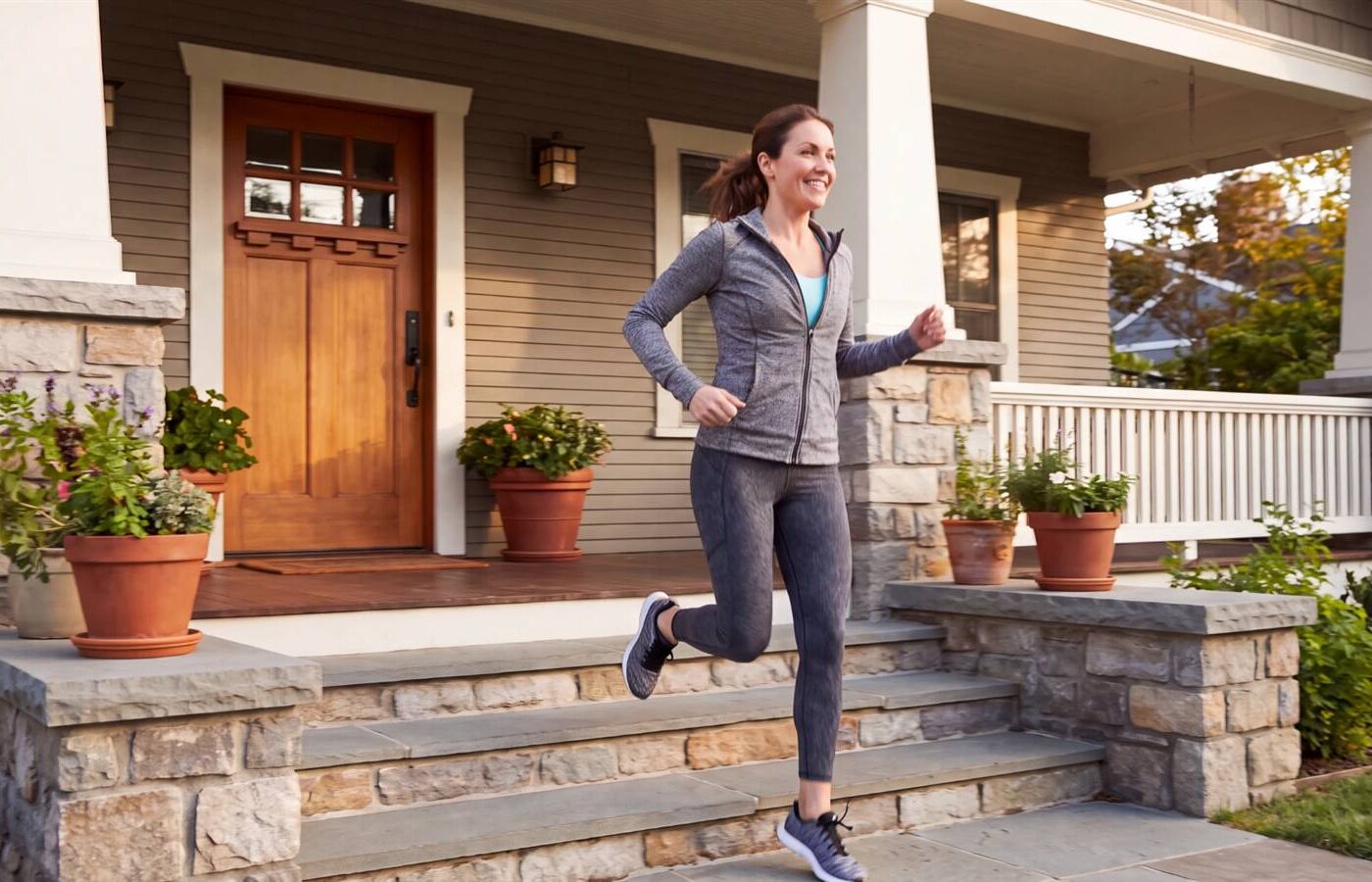
Many people feel that if they cannot fit in a full workout, there is no point in moving at all. Research on very short bursts of effort, often nicknamed “exercise snacks,” suggests the opposite. A large study of people who did not exercise found that a few minutes of brisk, breathless activity scattered through the day was linked with a much lower risk of dying. Here is what it showed, what it did not, and how to try it. It is general education, not medical advice.
What the study looked at
In 2022, Emmanuel Stamatakis and colleagues published a study in Nature Medicine using data from the UK Biobank. They analyzed 25,241 adults who reported that they did not exercise, and who wore an activity tracker on the wrist for a week. The researchers looked for what they called vigorous intermittent lifestyle physical activity (VILPA, which news coverage often shortens to “exercise snacks”): short bursts of effort of one to two minutes, such as walking fast uphill, climbing stairs quickly or hurrying with heavy shopping. They then followed people for an average of seven years.
What they found
- Three short bursts a day was linked with a big difference. People who did a median of three bursts of one to two minutes a day had a 38 to 40 percent lower risk of dying from any cause, or from cancer, compared with people who had none.
- Heart-related deaths were lower, too. The same group had a 48 to 49 percent lower risk of dying from cardiovascular disease.
- Less was still linked to benefit. About 4.4 minutes of these bursts a day in total was associated with a 26 to 30 percent lower risk.
How far to take it
- It is observational. People who do bursts of activity may differ in other healthy ways, and the study cannot prove cause and effect.
- The tracker guessed. Activity came from a wrist device worn for one week, which was assumed to represent normal life.
- The people were middle-aged and older UK adults. Results may differ elsewhere.
- The percentages are relative. Deaths were uncommon in the follow-up period, so the absolute difference is smaller than the headline suggests.
Even so, the direction fits with decades of research that finds the biggest gains come from going from nothing to something.
Ways to try exercise snacks
- Take the stairs briskly. One or two flights at a faster pace than usual.
- Walk fast for one to two minutes. Aim for a pace where talking is hard.
- Hustle up a hill or a ramp. Outdoors or on a treadmill. Our guide to the 12-3-30 workout looks at incline walking.
- Carry things with purpose. Bags from the car or laundry up the stairs.
- Add a minute to a walk. A short, brisk stretch in the middle of an easy one.
- Chair stands or wall push-ups. A few quick sets while the kettle boils.
Staying safe
- Start gently. Build the pace up over a few weeks.
- Check with a clinician first if you have heart disease, high blood pressure, chest pain, dizziness or have been inactive for a long time.
- Stop if something feels wrong. Chest pain, faintness or unusual breathlessness are reasons to stop and seek advice.
How it fits with everything else
Short bursts do not replace regular exercise, which brings more benefits. They are a way in. Our guides to NEAT, walking and strength training for beginners offer a path from a few minutes a day toward more.
In short
You do not need a gym, a plan or a free hour. A few minutes of effort spread across the day may be worth more than you think, and they are easy to start today.
Sources
- Stamatakis E, Ahmadi MN, Gill JMR, et al. Association of wearable device-measured vigorous intermittent lifestyle physical activity with mortality. Nature Medicine, 2022;28:2521-2529.
- University of Southern Denmark and University of Sydney news summaries of the study, 2022.
Weight Wire is free to read. A free account lets you save articles and use the private journal and food lookup, which are free to use too. Create my free account

Weight Wire Editorial Team
Writer at Weight Wire.